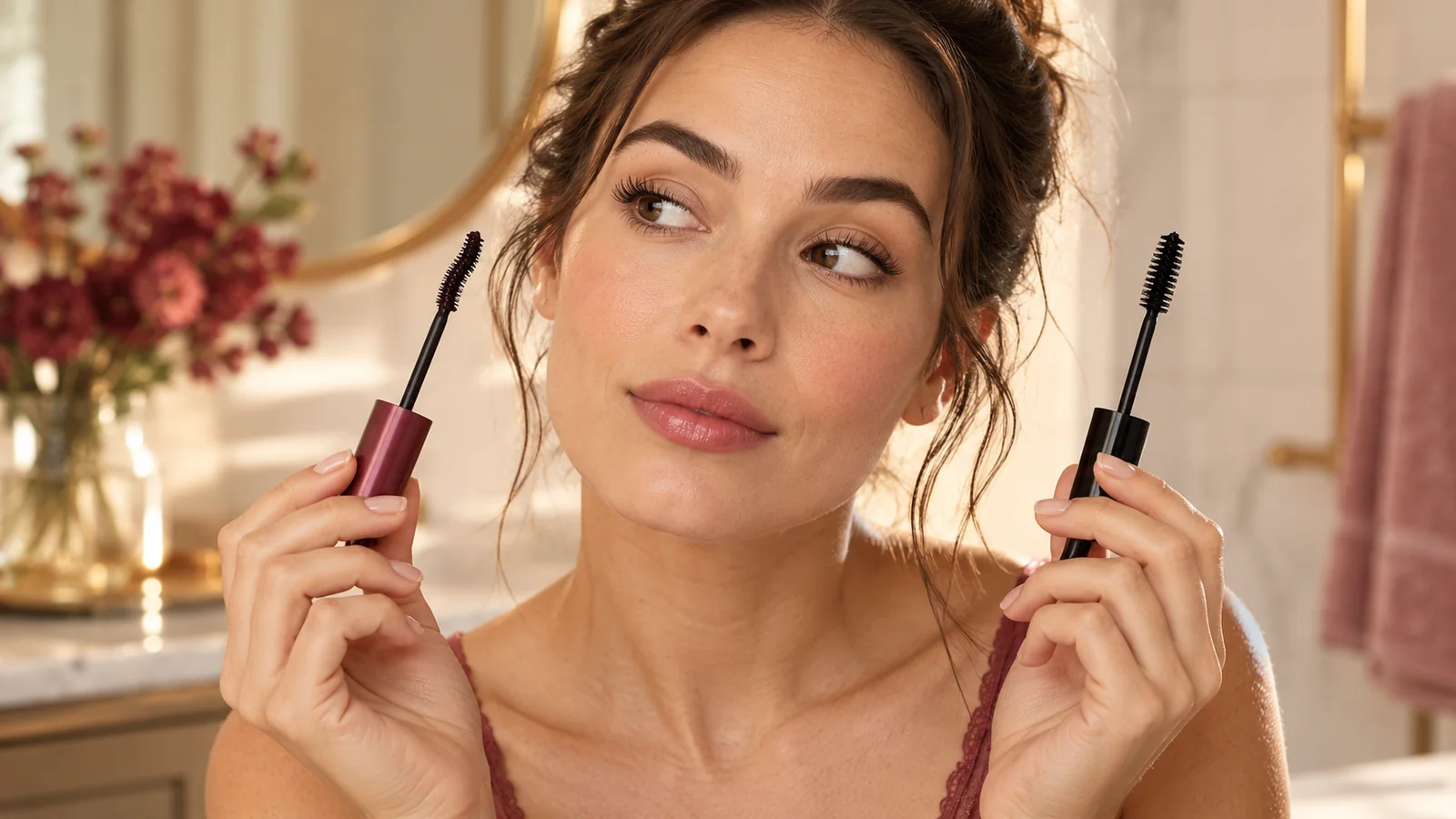
Quick answer: Tubing mascara surrounds lashes with removable polymer sleeves, while waterproof mascara uses a water-resistant film designed for demanding wear. The better option depends on exposure, removal and the kind of smudging you experience.
Start with the surface, finish and setting you actually have
Both categories can resist ordinary smudging, but they fail and remove differently. Tubes usually release with warm water and gentle pressure. Waterproof formulas typically require an oil-based or dedicated remover. Always follow the current product directions because individual formulas vary.
If mascara transfers because your lashes touch oily skin, tubing may help. If you expect swimming, heavy tears or intense humidity, a waterproof claim may be more relevant. Neither label guarantees identical performance across brands.
A practical method
Understand how tube-forming and water-resistant films behave
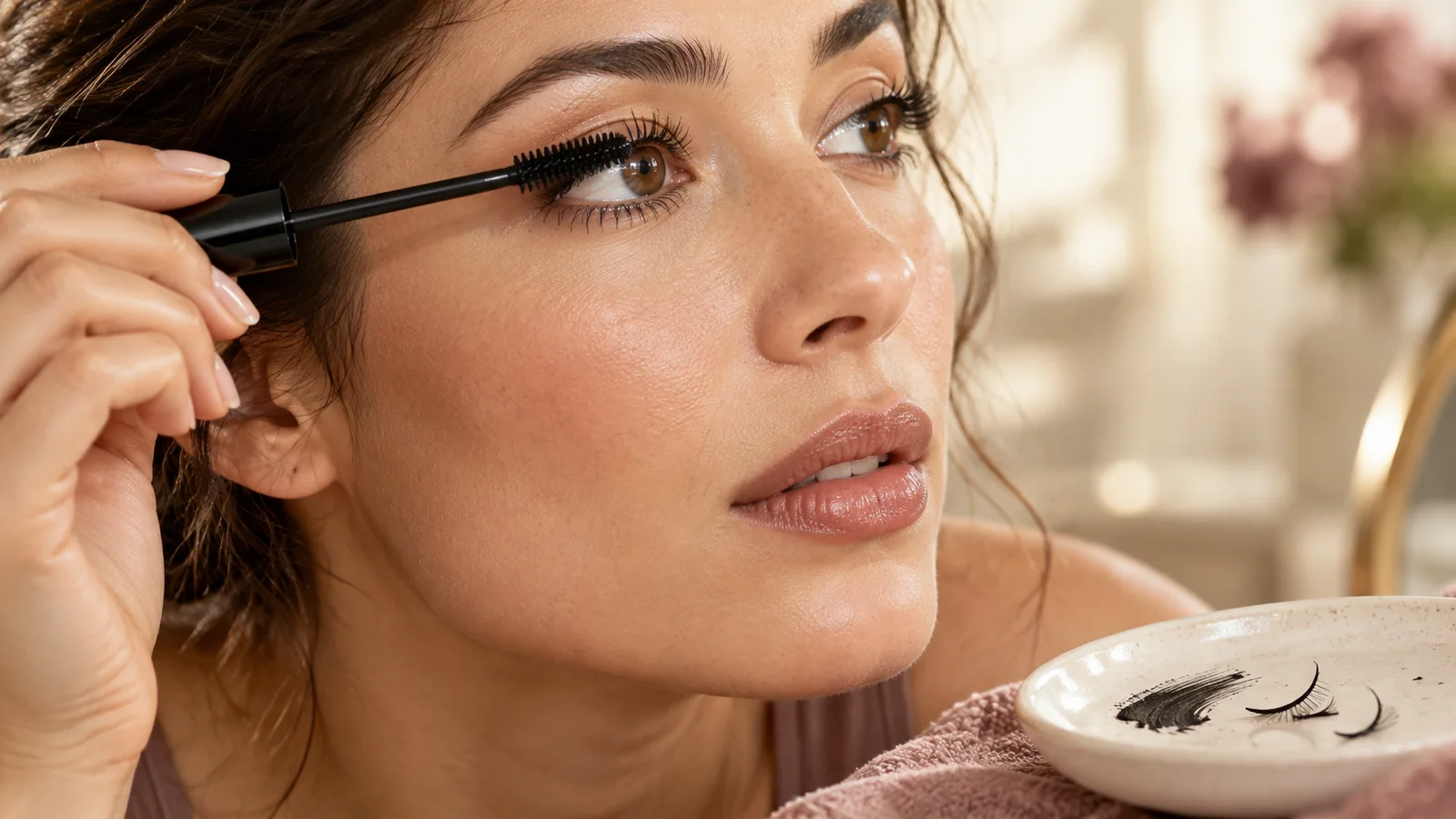
Tubing polymers form small sheaths around individual lashes. On removal, the pieces can look like short lash-shaped fibers; that is not automatically lash loss. Waterproof mascara forms a resilient coating that resists water but may still transfer when exposed to oil.
Decide whether humidity, tears or easy removal matters most

For commuting and long office days, easy warm-water removal may outweigh maximum water resistance. For weddings, sports or wet conditions, waterproof wear may be the priority. If eyes water frequently or remain irritated, address the cause with an appropriate professional rather than relying on mascara.
Check brush shape as carefully as the formula claim
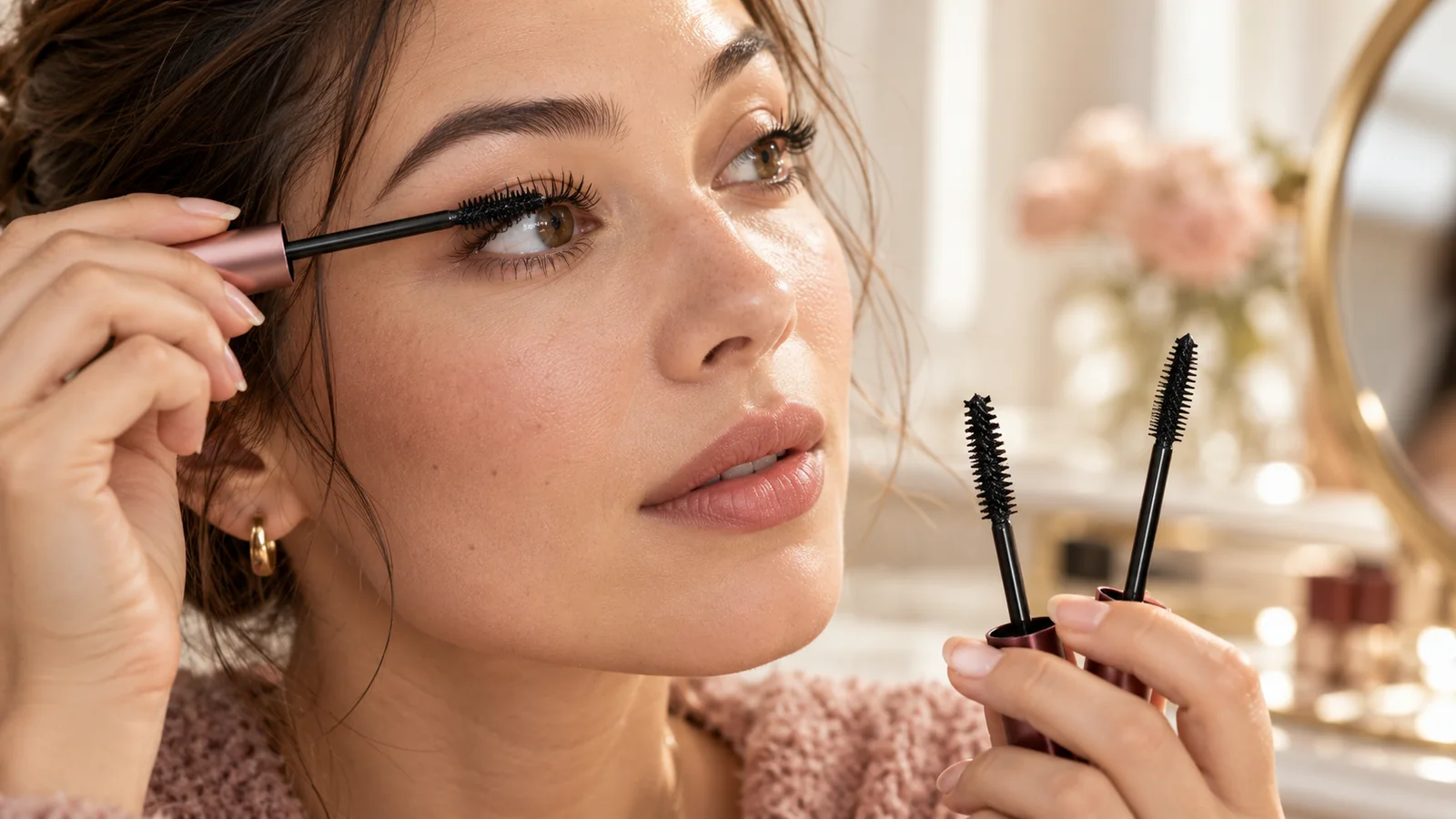
A narrow brush reaches short inner lashes; a curved brush can support lift; a dense hourglass brush deposits more product. People often attribute clumps or poor separation to formula when the brush is delivering more mascara than their lashes can hold.
Apply thin coats before the first layer fully sets

Wipe visible excess from the wand, place it near the roots without touching the waterline, and sweep upward. Add a second thin coat while the first remains slightly flexible. Fully dried tubing mascara can clump when repeatedly reworked.
Keep the lash line clean to reduce transfer

Allow skincare and concealer near the eyes to settle, remove excess balm, and avoid coating the surrounding skin with mascara. If under-eye makeup is part of the problem, use the targeted approach in the concealer creasing guide.
Remove each formula with the method designed for it
For tubing mascara, hold warm water against closed eyes and slide the softened tubes away without pulling. For waterproof mascara, saturate a pad with suitable remover, pause, then wipe gently. Rubbing can irritate the eye area and stress lashes.
How to choose between the two
| Situation | Likely starting point | Reason |
|---|---|---|
| Daily smudging | Tubing | Tube film can reduce transfer |
| Swimming or heavy tears | Waterproof | Designed for stronger water resistance |
| Removal sensitivity | Tubing | Often releases without oily remover |
| Curl drops quickly | Compare waterproof formulas | Some hold curl more firmly |
Common mistakes
- Pumping the wand, which introduces air into the tube.
- Sharing mascara or using a tester wand twice.
- Adding water to revive a drying formula.
- Pulling at resistant mascara instead of allowing remover time to work.
Review hygiene and replacement decisions in the makeup expiration guide.
Frequently asked questions
Does tubing mascara come off when you cry?
Light moisture may not remove it, but prolonged warm water and pressure can loosen tubes. Performance varies by formula.
Is waterproof mascara safe for daily use?
It can be used as directed, but removal requires care. Stop if the product or removal process causes persistent discomfort.
Why are there black pieces in the sink after removal?
Tubing formulas often release as intact polymer sleeves. Check for attached natural lashes before assuming breakage.
The bottom line
Pick tubing when clean wear and straightforward removal matter most; pick waterproof when water exposure is the central challenge. Brush design and gentle removal are as important as the formula category.