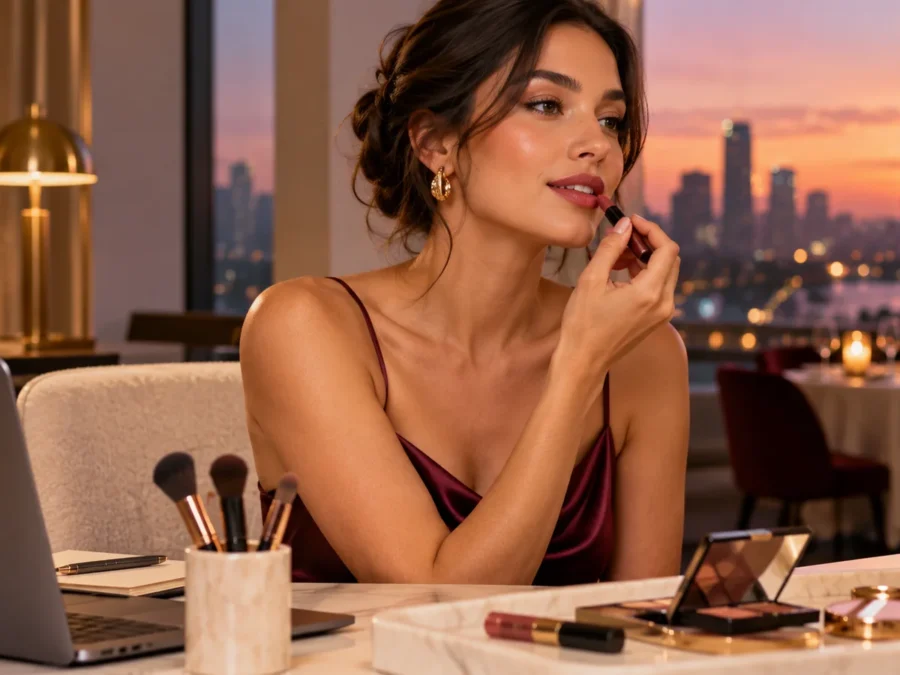
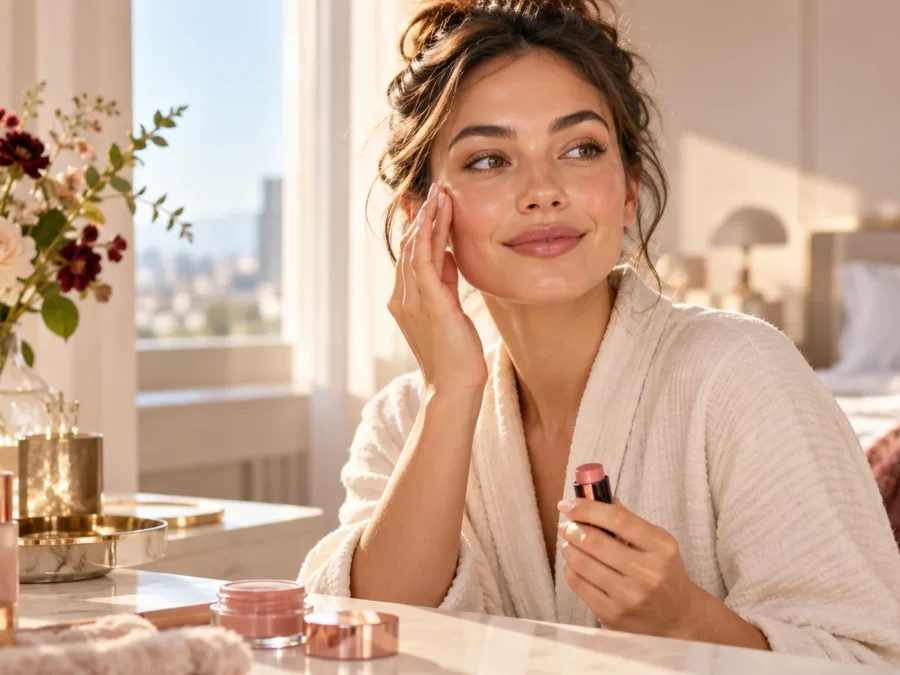
Quick answer: The best makeup light is even, high-quality illumination that reaches both sides of the face and lets you verify color in the setting where the makeup will be seen. Indirect daylight is useful but not always available.
Start with the real decision
Brightness alone is not accuracy. Direction, color temperature and color rendering affect how foundation, blush and blending appear. A very bright overhead bulb can still create misleading shadows.
A practical method
Prioritize light that reaches both sides of the face evenly

Use lights at face height on both sides of a mirror or a well-diffused source in front. Uneven side light exaggerates texture on one half and hides blending on the other. Avoid working with a bright window directly behind you.
Use indirect daylight when it is available
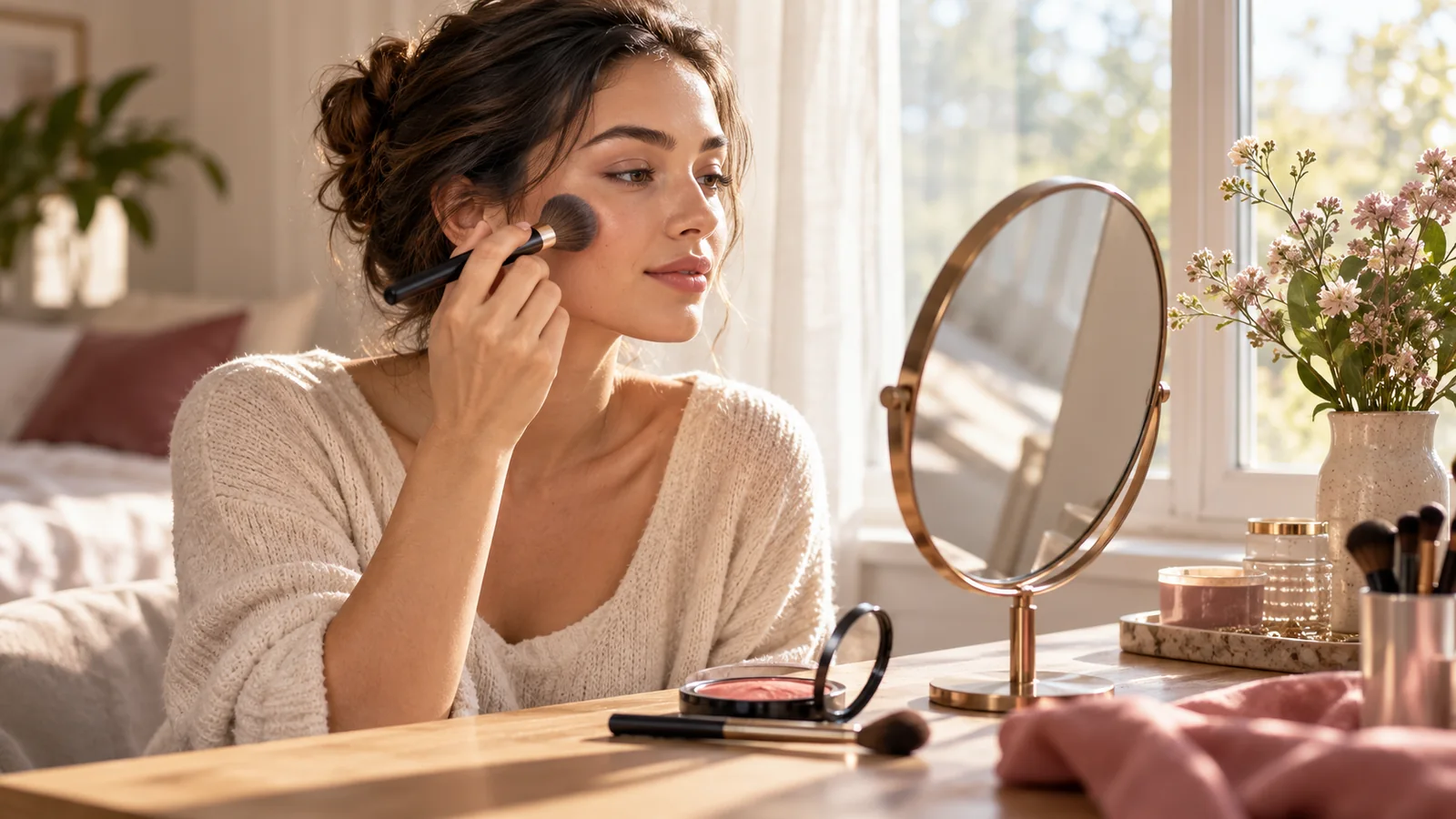
Face a window with sheer diffusion or stand near indirect daylight. Direct sun changes rapidly and creates hard contrast. Daylight is especially useful for shade matching, as described in the undertone guide.
Choose high color-rendering artificial light for consistency
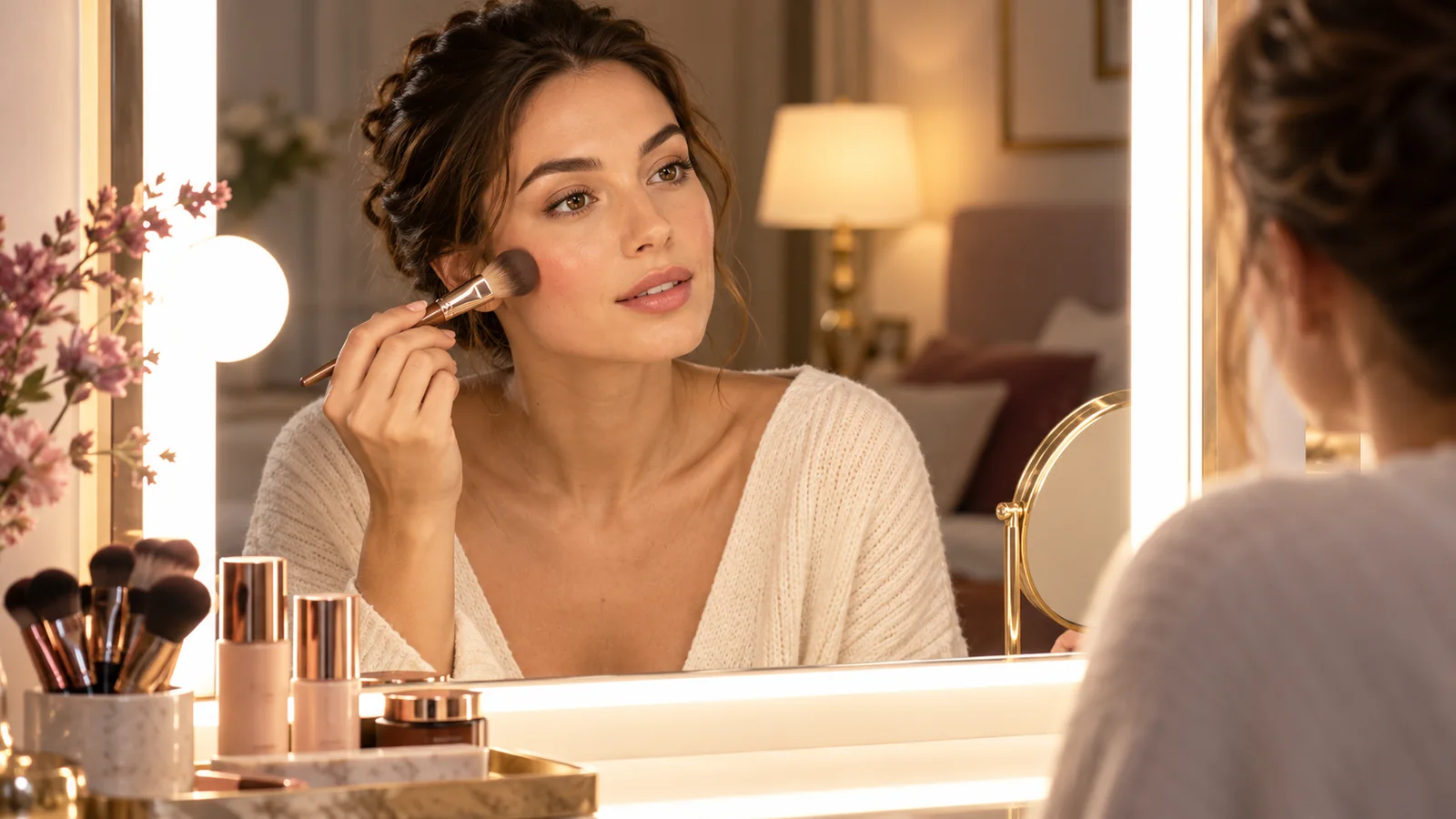
Look for reputable bulbs with a high color-rendering index and a neutral daylight-to-warm-white range appropriate to your room. Two bulbs with the same Kelvin rating can still render reds differently, so CRI and placement both matter.
Avoid relying on a single overhead source
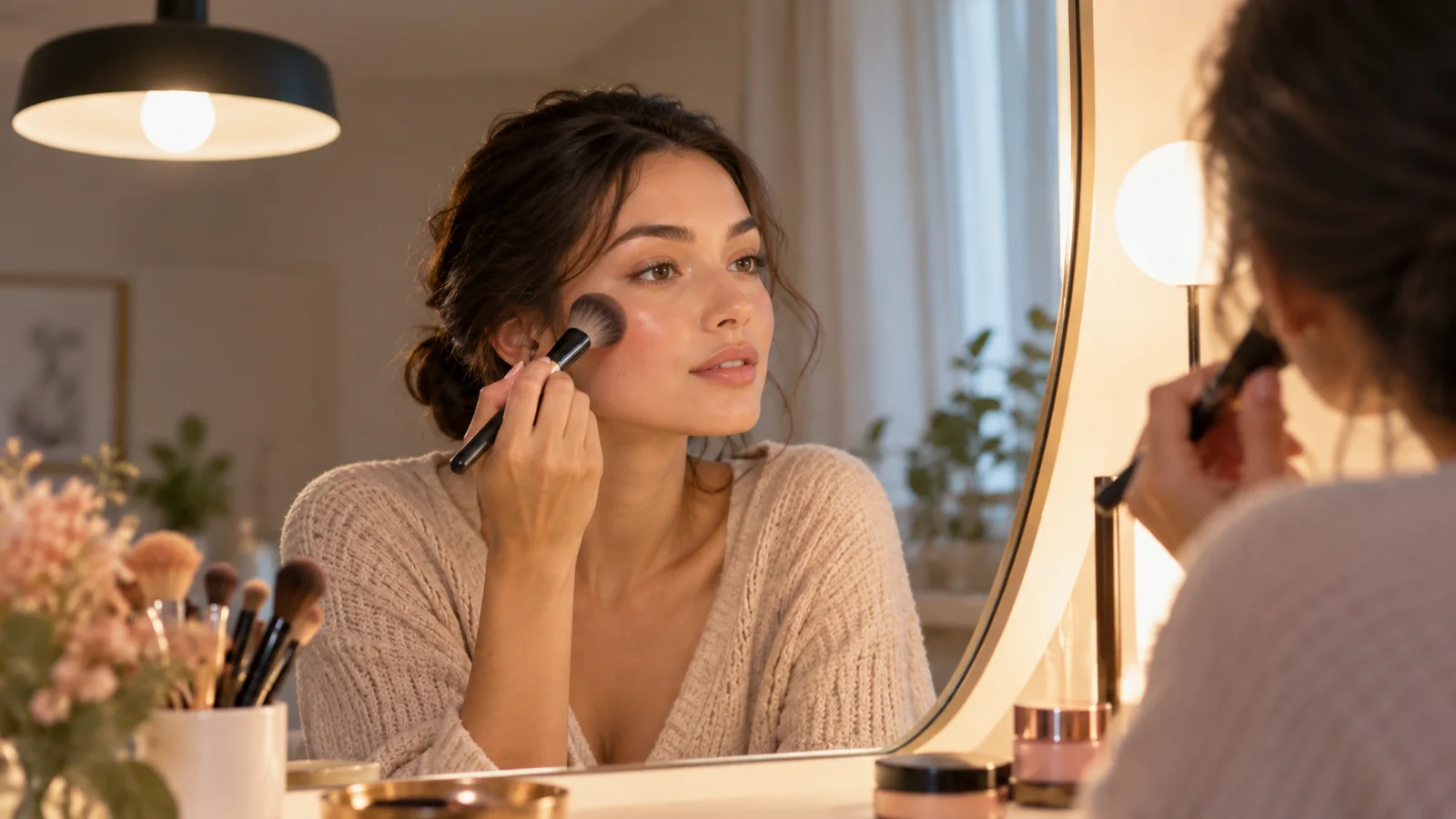
Ceiling light creates shadows beneath brows, eyes and chin, encouraging excess concealer or uneven bronzer. Add front-facing light rather than increasing overhead brightness. A ring light can help, but very close use may flatten normal dimension.
Check makeup from more than one angle and distance
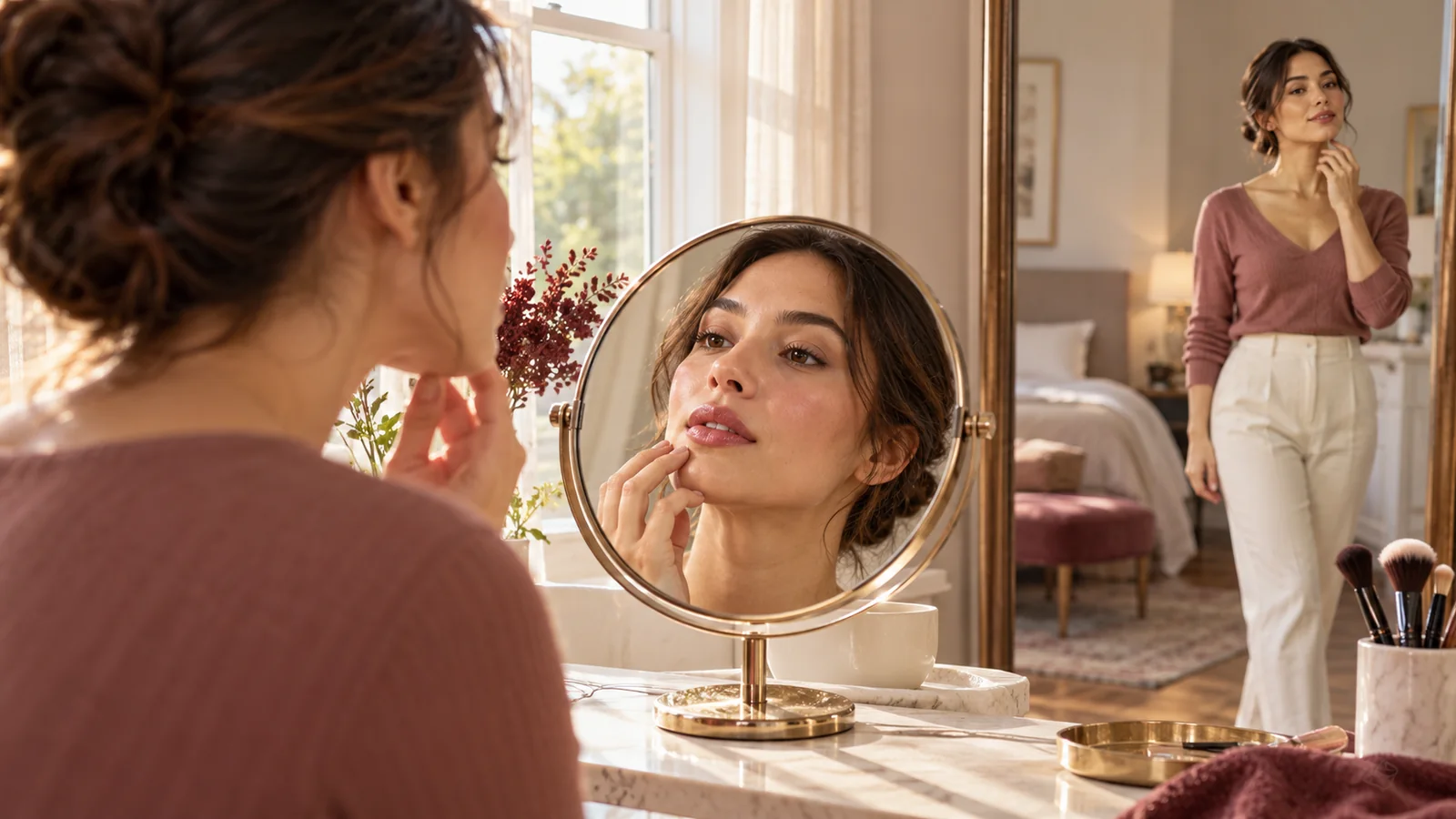
Move back from the mirror, turn the head and inspect the jaw and hairline. Magnification is for precision, not the final aesthetic judgment. Review symmetry with a relaxed expression and both eyes open.
Do a final review in the lighting where the look will be seen
Office fluorescents, restaurant light and flash photography reveal different details. Check in a second realistic setting before an event. For quick routines, use the daylight review step in the 10-minute morning guide.
Lighting problems and fixes
| Problem | Likely cause | Fix |
|---|---|---|
| One cheek looks heavier | Uneven side light | Balance front sources |
| Foundation looks orange outside | Very warm indoor bulb | Check in neutral light |
| Under-eyes look unusually dark | Overhead shadows | Add face-height light |
| Flash shows excess powder | Finish not tested for photography | Take a test image |
Frequently asked questions
What color temperature is best?
A neutral range around ordinary daylight or neutral white is practical, but accurate color rendering and balanced placement matter as much as Kelvin.
Is a ring light required?
No. Two diffused front-facing lights or indirect window light can provide excellent visibility.
Why does makeup look different in every room?
Light sources vary in direction, spectrum and intensity. A final check in the destination lighting reduces surprises.
The bottom line
Create even front-facing illumination, use daylight as a reference and review the result beyond a close mirror. Better lighting prevents unnecessary product from becoming the solution to a shadow.