Quick answer: Brown eyeliner creates definition with less contrast than black, but it still needs enough depth to remain visible. Shade, texture and placement determine whether the result looks softly polished or indistinct.
Start with the surface, finish and setting you actually have
Brown is a family of colors: espresso, neutral cocoa, warm chestnut, bronze and gray-brown behave differently. A brown close to your skin depth may disappear; one several levels deeper will define lashes while retaining a softer edge than black.
Plan the shape with your eyes open. The visible space, fold and outer corner matter more than copying a standard wing. Short marks are easier to correct than one long stroke.
A practical method
Select a brown depth that remains visible against your coloring
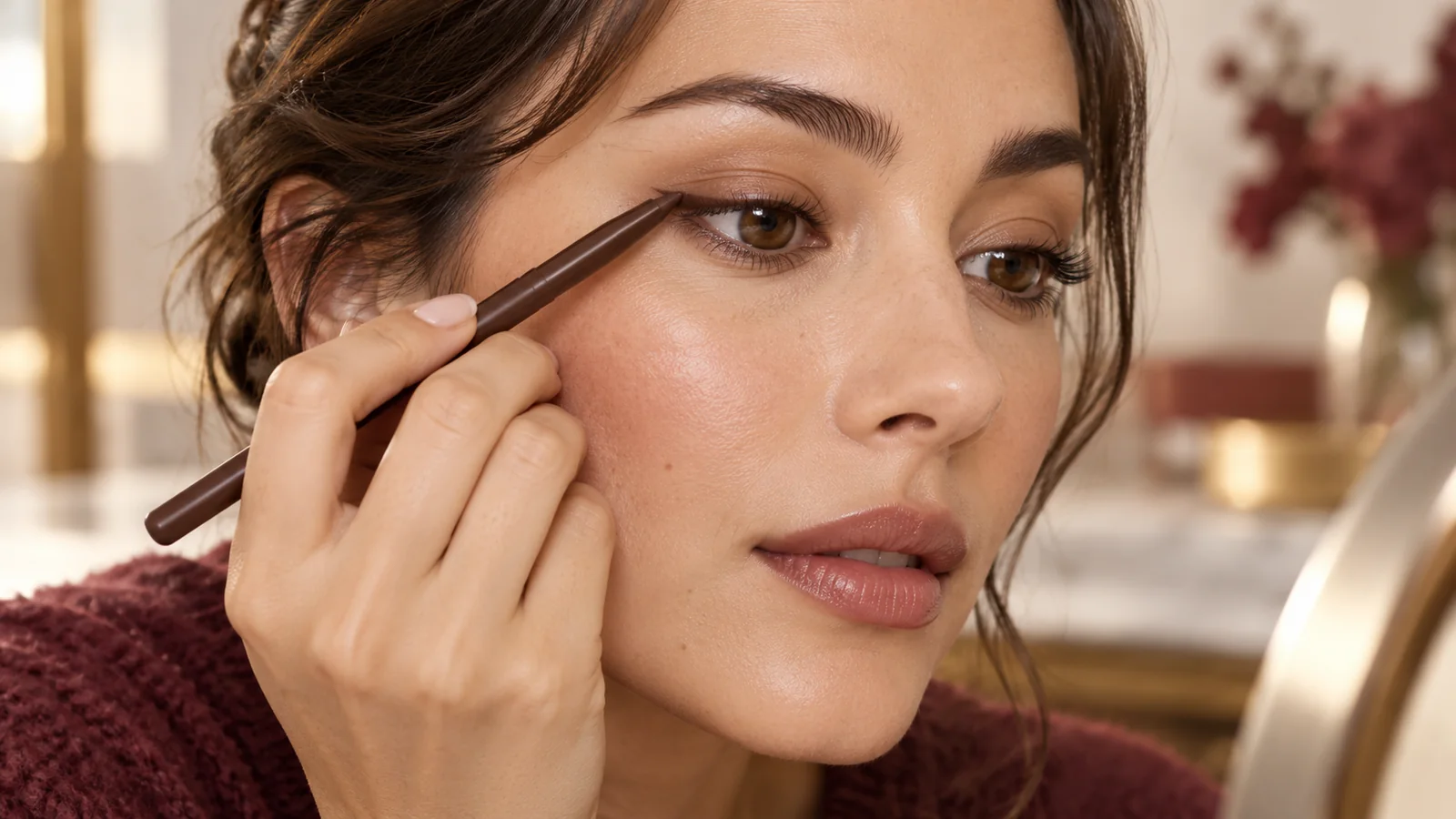
Fair complexions may get clear definition from medium cocoa, while deeper complexions often need espresso or a saturated bronze. Undertone changes the mood: warm brown emphasizes warmth; neutral or cool brown creates a quieter shadow. Swatch for depth, not just the word brown.
Choose pencil, gel or liquid according to the edge you want
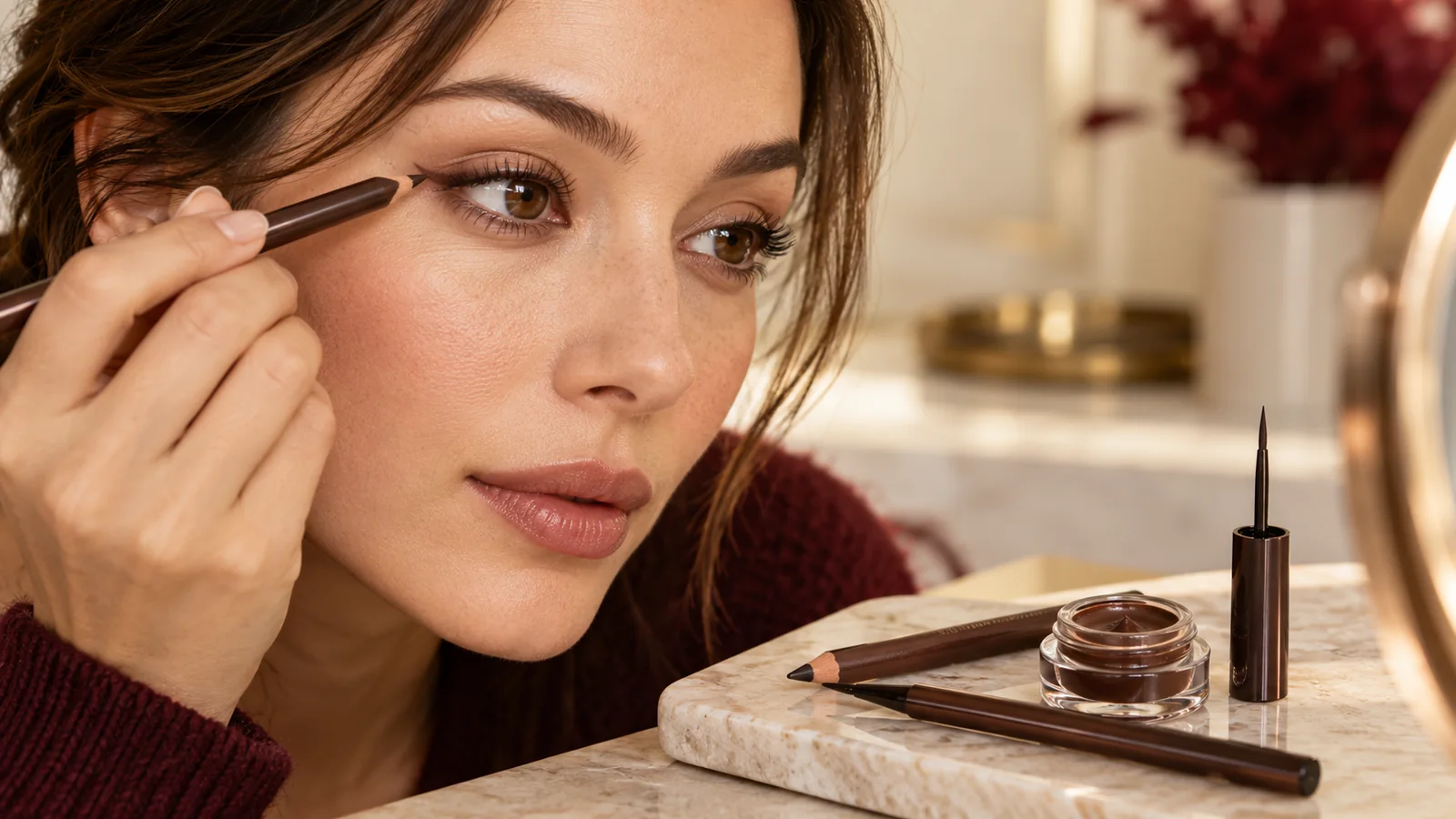
Pencil gives time to soften and suits a hazy lash line. Gel provides richer pigment with brush control. Liquid creates the sharpest edge and requires a steadier path. A deep brown shadow applied with a damp angled brush offers the most forgiving entry point.
Anchor pigment close to the upper lash roots
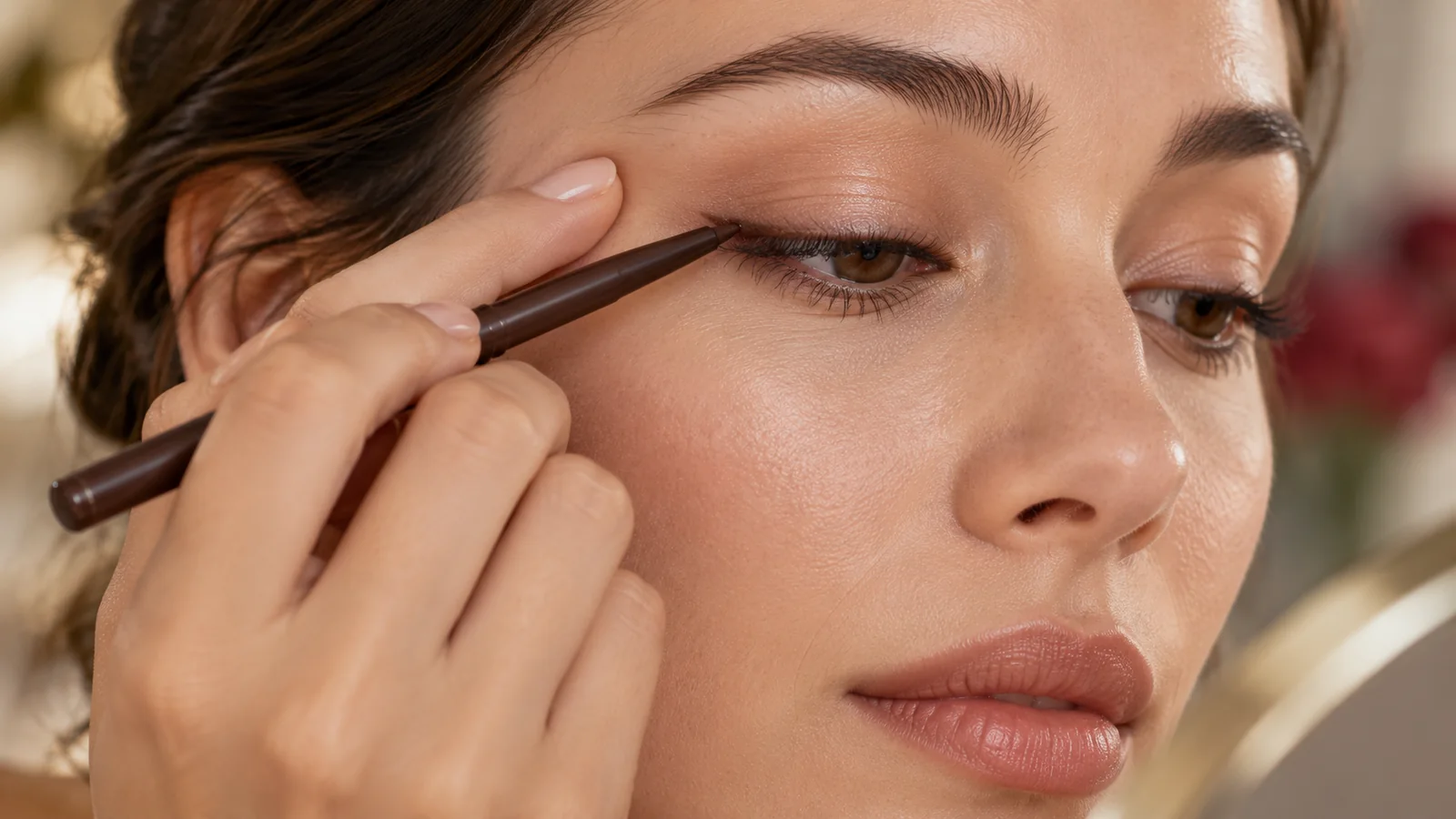
Look slightly downward into a mirror and press color between the visible lash roots, working in small sections. This makes lashes look fuller without consuming lid space. Avoid placing cosmetic liner on the inner eye unless the label specifically permits that use.
Build the outer corner with short connected strokes
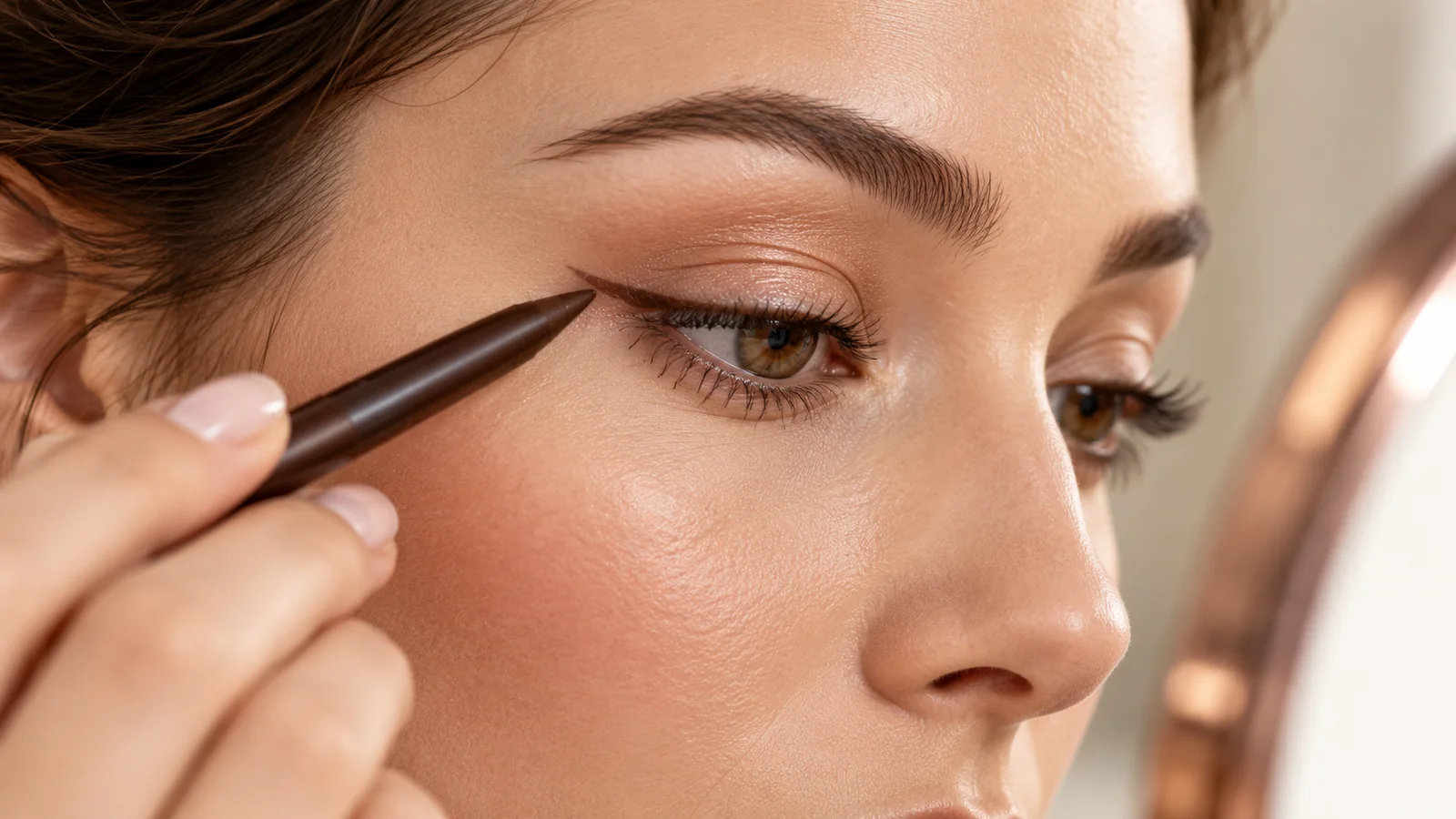
Follow the direction of the lower lash line for a lifted effect, then connect the tip back toward the upper lashes. Keep the first mark shorter than the intended finish; length is easy to add and harder to remove without disturbing base makeup.
Soften only the edge that should look diffused
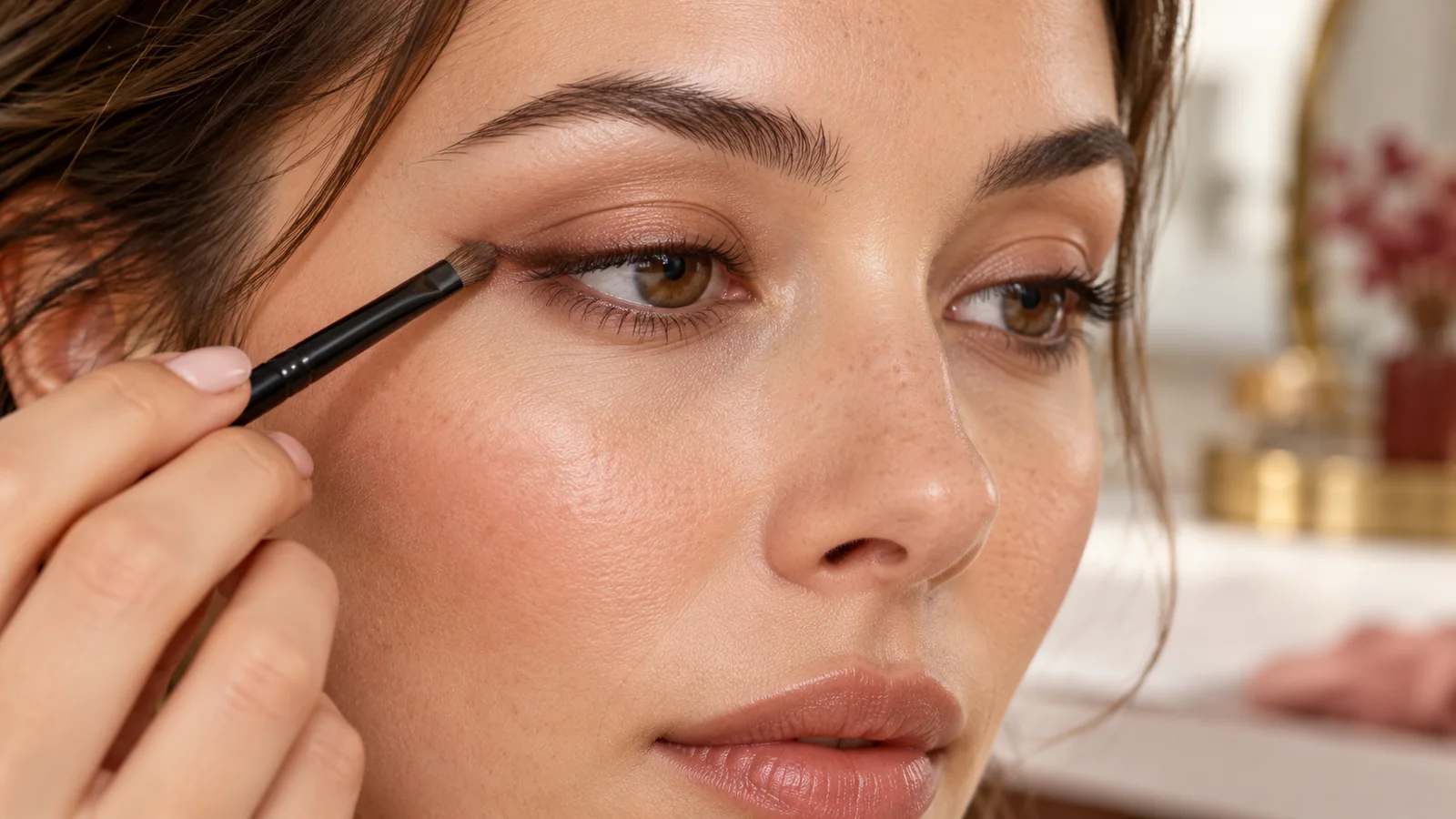
Use a small firm brush before pencil or gel sets. Blur the upper boundary while leaving the lash roots saturated. If every edge is blended equally, the line can become a broad muddy shadow rather than controlled definition.
Balance the liner with mascara and understated lower-lash definition
Apply mascara mainly at the roots and outer lashes. For the lower eye, use leftover product on a brush or a few soft pencil dots instead of a continuous heavy band. For limited visible lid space, adapt the placement using the hooded-eye makeup guide.
Pair brown liner with the rest of the look
Neutral taupe, bronze, muted plum and soft rose all sit comfortably beside brown liner. For a minimal face, keep the liner close to the lashes and add mascara. For evening, deepen only the outer third or layer espresso over a softer brown base.
Troubleshooting
- The line looks red: choose neutral espresso rather than copper brown.
- The wing transfers: shorten it, let skincare settle and set the immediate area lightly.
- The shape looks uneven: compare it with both eyes open, then adjust the shorter side in small increments.
- The pencil skips: warm it briefly on the back of a clean hand; replace it if the texture has changed with age.
Use accurate light while judging symmetry; the guide to makeup lighting explains why a single overhead source can mislead.
Frequently asked questions
Can brown eyeliner work with dark brown eyes?
Yes. Choose a brown deep enough to contrast with both the iris and lash line, such as espresso or a saturated bronze.
Should brown liner match eyebrow color?
No. They can harmonize, but liner should be selected for eye definition and may be deeper than the brow product.
How can I make brown liner last longer?
Use thin layers, allow them to set and press a matching powder shadow over pencil or gel when extra hold is needed.
The bottom line
A successful brown line is deliberate, not merely faint. Choose adequate depth, keep saturation at the lashes and diffuse only the edge that benefits from softness.