Quick answer: Clean liquid- and cream-product tools more often than powder brushes, and wash makeup sponges after each use or very frequently. Complete drying is as important as washing.
Start with the real decision
Cleaning frequency depends on product texture, use, storage and whether a tool is shared. There is no hygienic benefit to an ambitious schedule that leaves brushes damp in a closed container.
A practical method
Separate tools used with liquids from tools used with dry powders

Foundation and concealer tools accumulate moist product that supports residue and odor faster than a brush used only for loose powder. Keep groups separate so a seemingly clean powder brush does not justify delaying the tools that need attention sooner.
Clean complexion sponges frequently and let them dry fully

After use, wet the sponge, work in a mild cleanser, compress repeatedly without tearing and rinse until water runs clear. Squeeze in a clean towel and air-dry in an open ventilated space. Do not return a damp sponge to a sealed bag.
Wash brushes with controlled water placement

Point bristles downward and wet the fibers rather than soaking the ferrule and handle. Massage cleanser through the bristles with fingers or a textured mat using moderate pressure. Prolonged soaking can loosen adhesive and damage the brush.
Rinse until residue and cleanser are removed
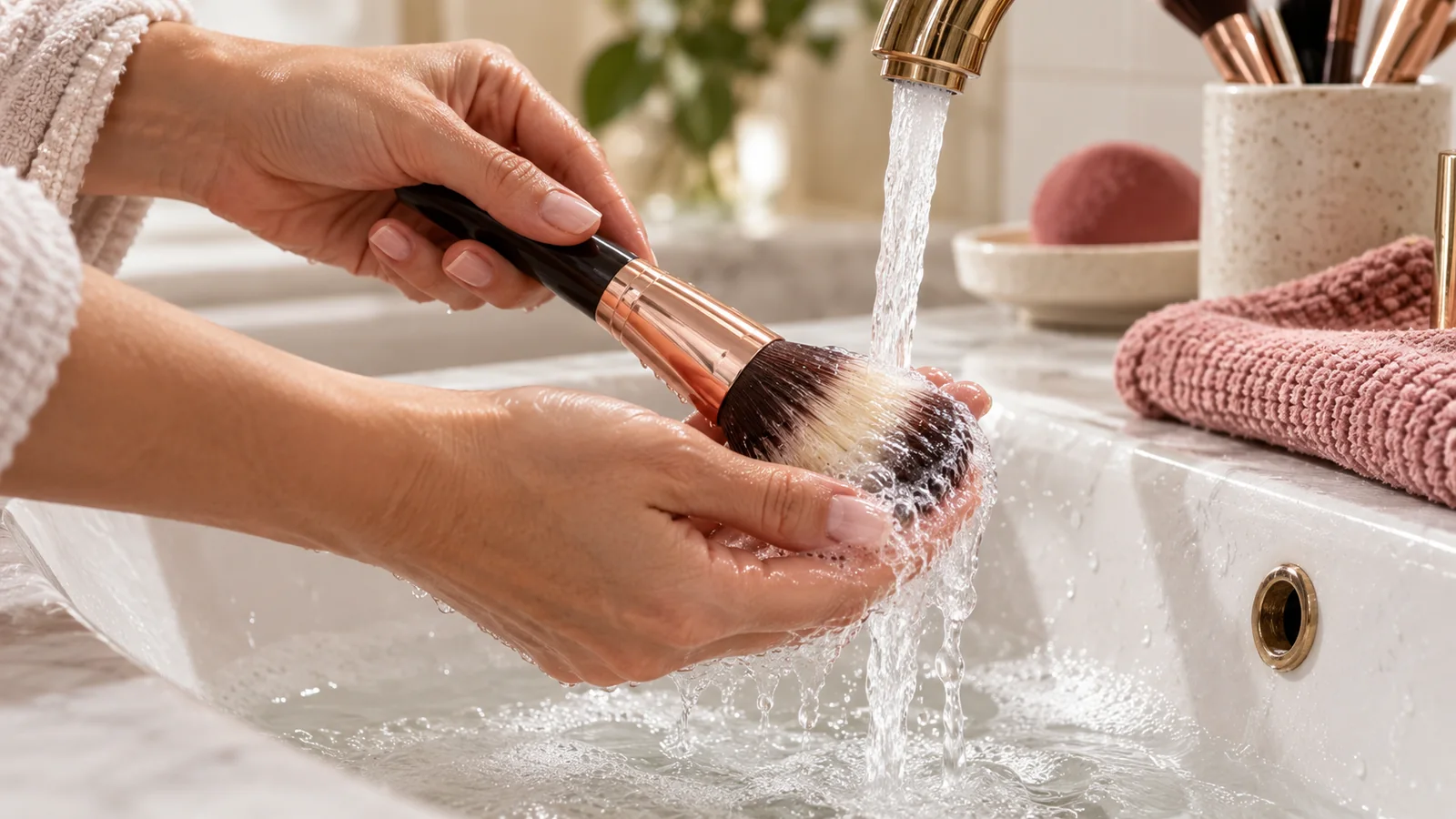
Foundation may require more than one gentle wash. Spread the bristles to check the center and continue rinsing until no foam or color remains. Avoid very hot water, which can affect fibers and construction.
Reshape and air-dry tools in a ventilated area

Press out water, restore the brush shape and lay it flat with bristles extending beyond a counter edge, or use a suitable drying rack. Direct high heat can deform synthetic fibers. Ensure the core is dry before storage.
Replace tools that remain damaged, odorous or impossible to clean
Discard a sponge that tears, stays discolored with unusual odor or never dries properly. Replace shedding brushes or those with cracked handles that cannot be cleaned. Review product hygiene alongside the makeup expiration guide.
A realistic schedule
- Sponges: after each use or as close to it as practical.
- Liquid complexion brushes: at least weekly for personal use, sooner with heavy use.
- Eye brushes: frequently when changing colors; immediately after use during an eye infection.
- Powder-only face brushes: regularly based on use and residue.
Spot cleaner removes surface color between looks but does not replace periodic washing. If you use both sponges and brushes, compare their strengths in the base-tool guide.
Frequently asked questions
Can I use dish soap on brushes?
A strong degreaser may be harsh on some fibers and skin. Prefer a mild cleanser intended for tools and rinse thoroughly.
Should brushes dry upright?
Not with wet bristles pointing up, because water can enter the ferrule. Dry flat or bristles downward.
Can tools be shared after cleaning?
Professional sanitation has stricter requirements. For personal use, avoiding shared eye and lip tools is the safer default.
The bottom line
Clean according to what the tool touches, rinse completely and prioritize open-air drying. A damp “clean” tool stored too soon has not completed the hygiene process.