Quick answer: A sponge gives a diffused, flexible base and removes some excess; a brush offers speed, precision and potentially higher coverage. Tool density, pressure and cleanliness matter more than declaring one universally better.
Define the result before choosing the method
The same foundation can look different with a damp sponge, flat brush or dense buffing brush. Compare tools using equal product and the finish you want, not different amounts that predetermine the result.
A practical approach
Match tool density to the coverage you want
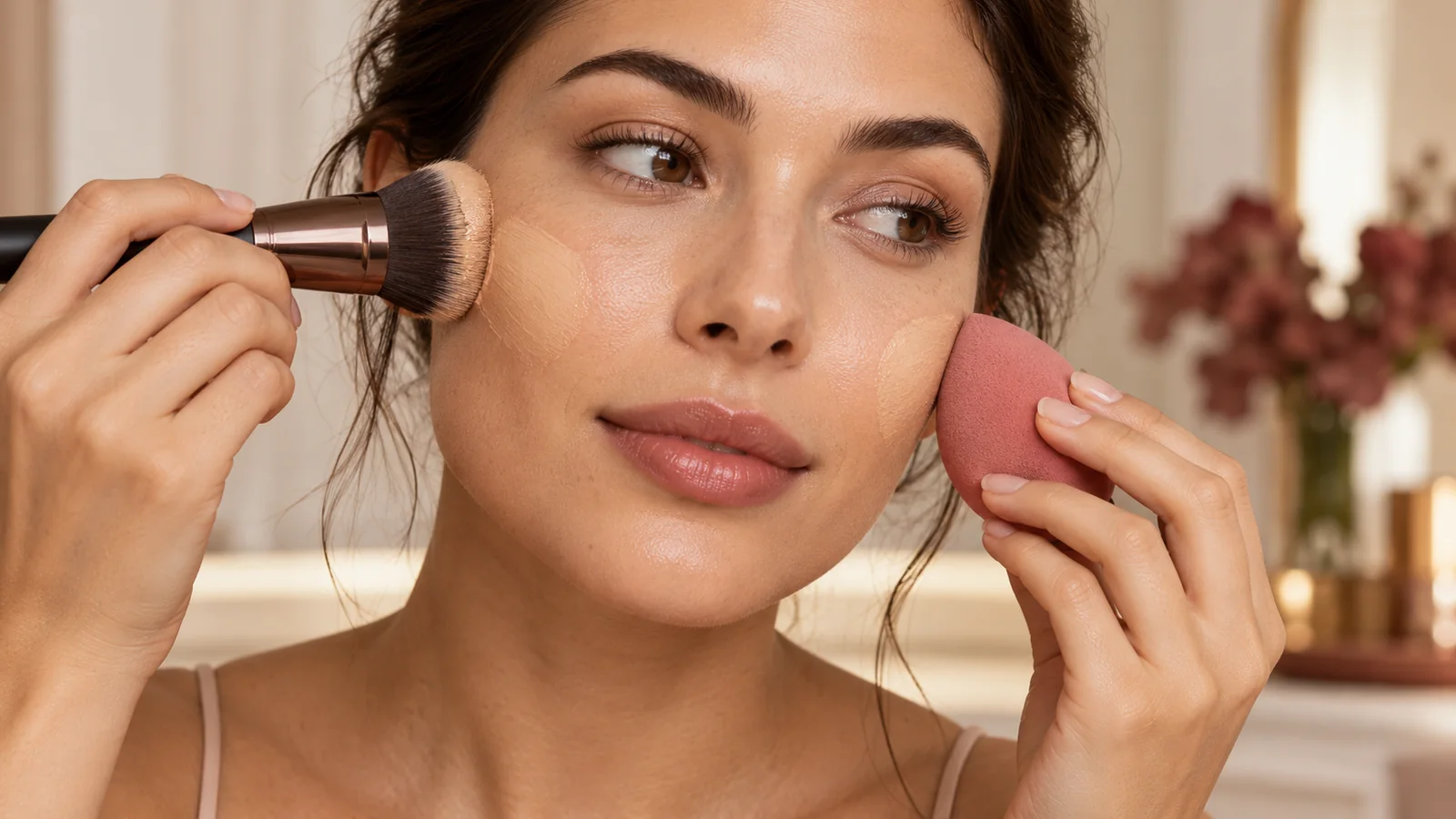
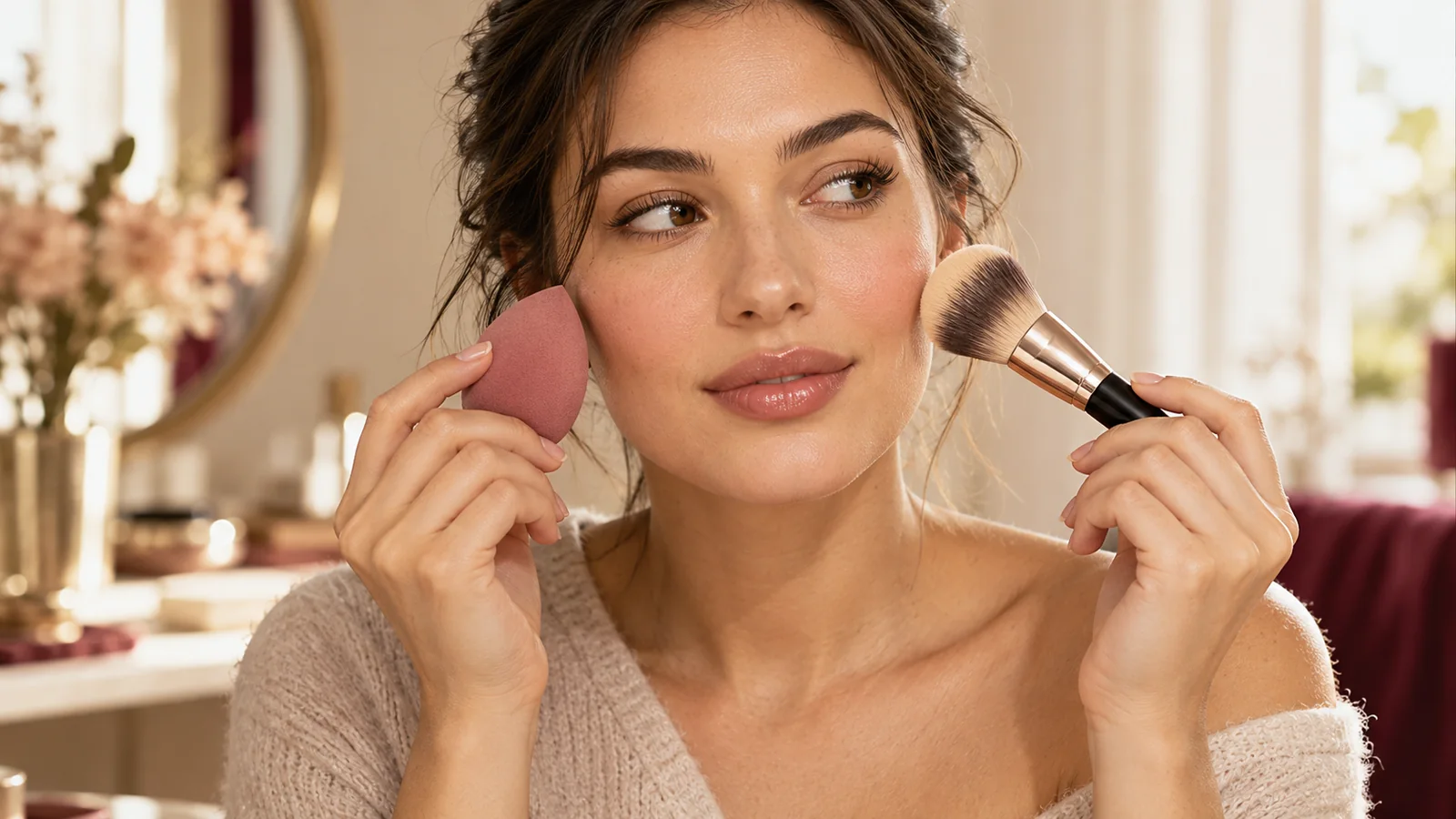
Dense brushes deposit and move more pigment, while loosely packed or duo-fiber brushes create sheerer layers. A sponge absorbs some product and softens edges. For high coverage, place foundation with a brush and use a sponge only to refine.
Use a damp sponge with controlled bouncing pressure
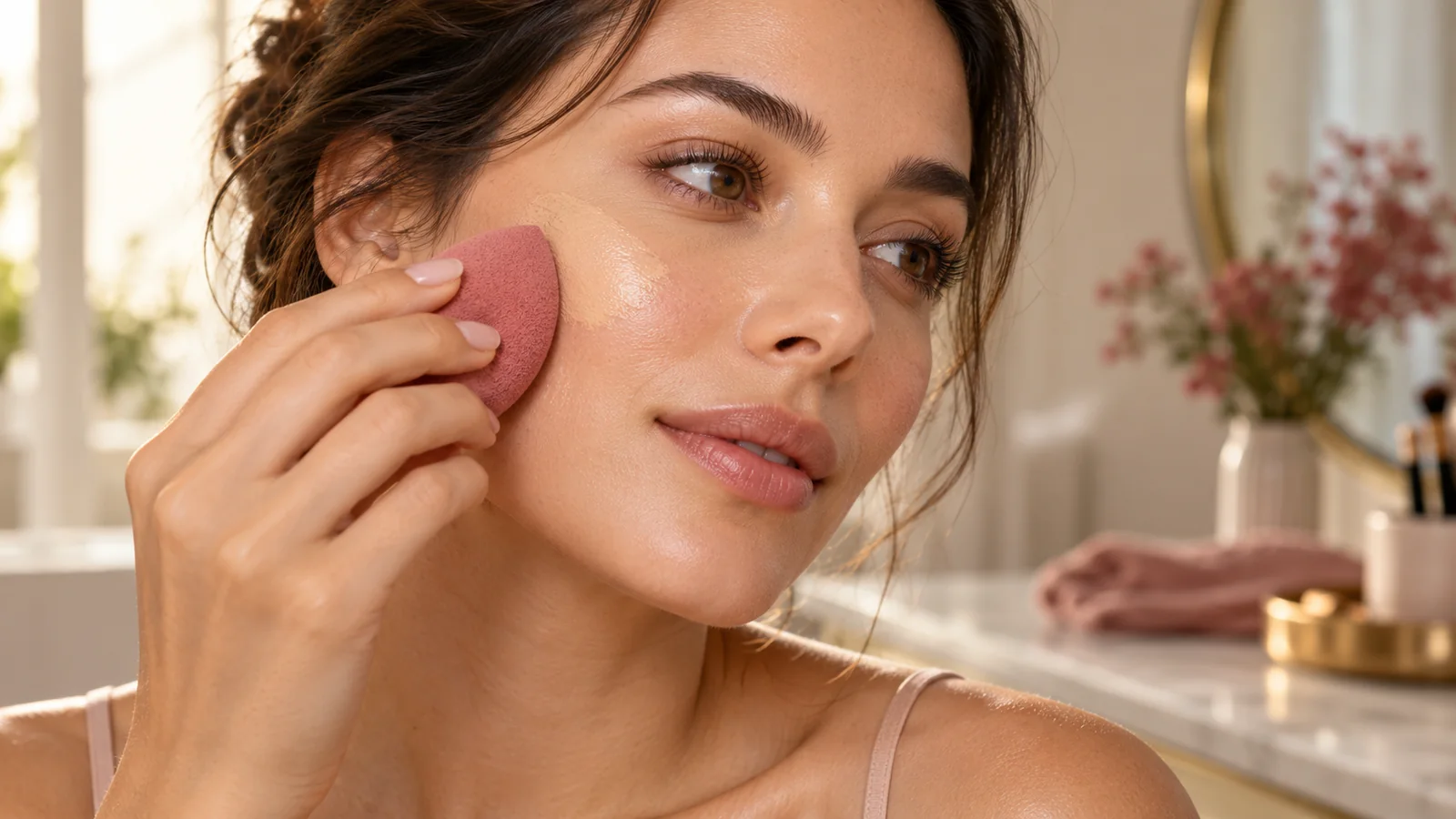
Wet the sponge until expanded, squeeze thoroughly and remove excess water in a clean towel. Bounce rather than drag. A soaking sponge dilutes product; a dry sponge can absorb more and pull across the skin.
Choose brush shape according to liquid, cream or powder texture
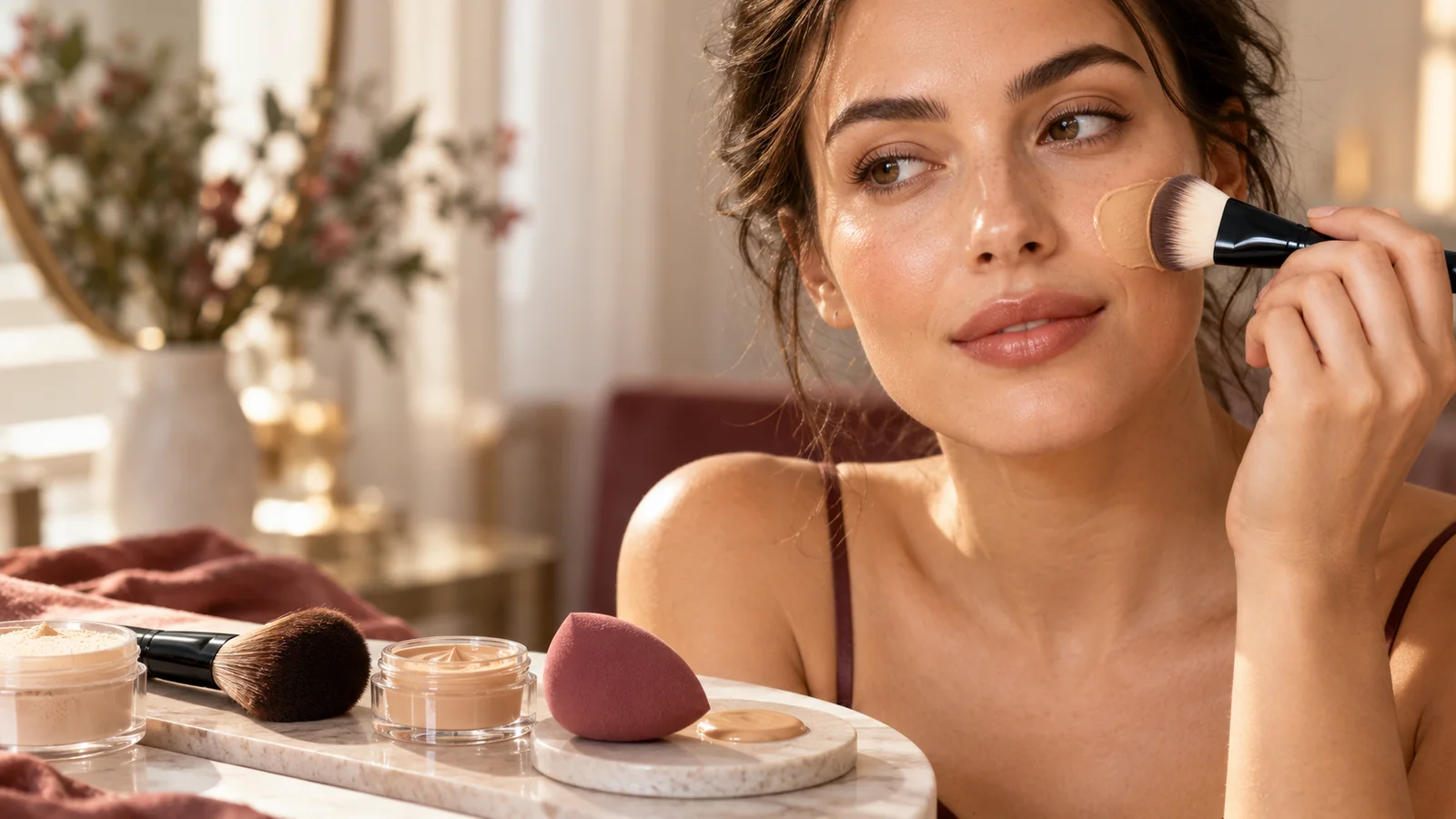
Flat synthetic brushes place creams precisely, rounded buffing brushes spread liquid, and soft fluffy brushes distribute powder. A brush is not automatically multipurpose; check whether its shape reaches the areas you need without leaving streaks.
Work in sections before product begins to set
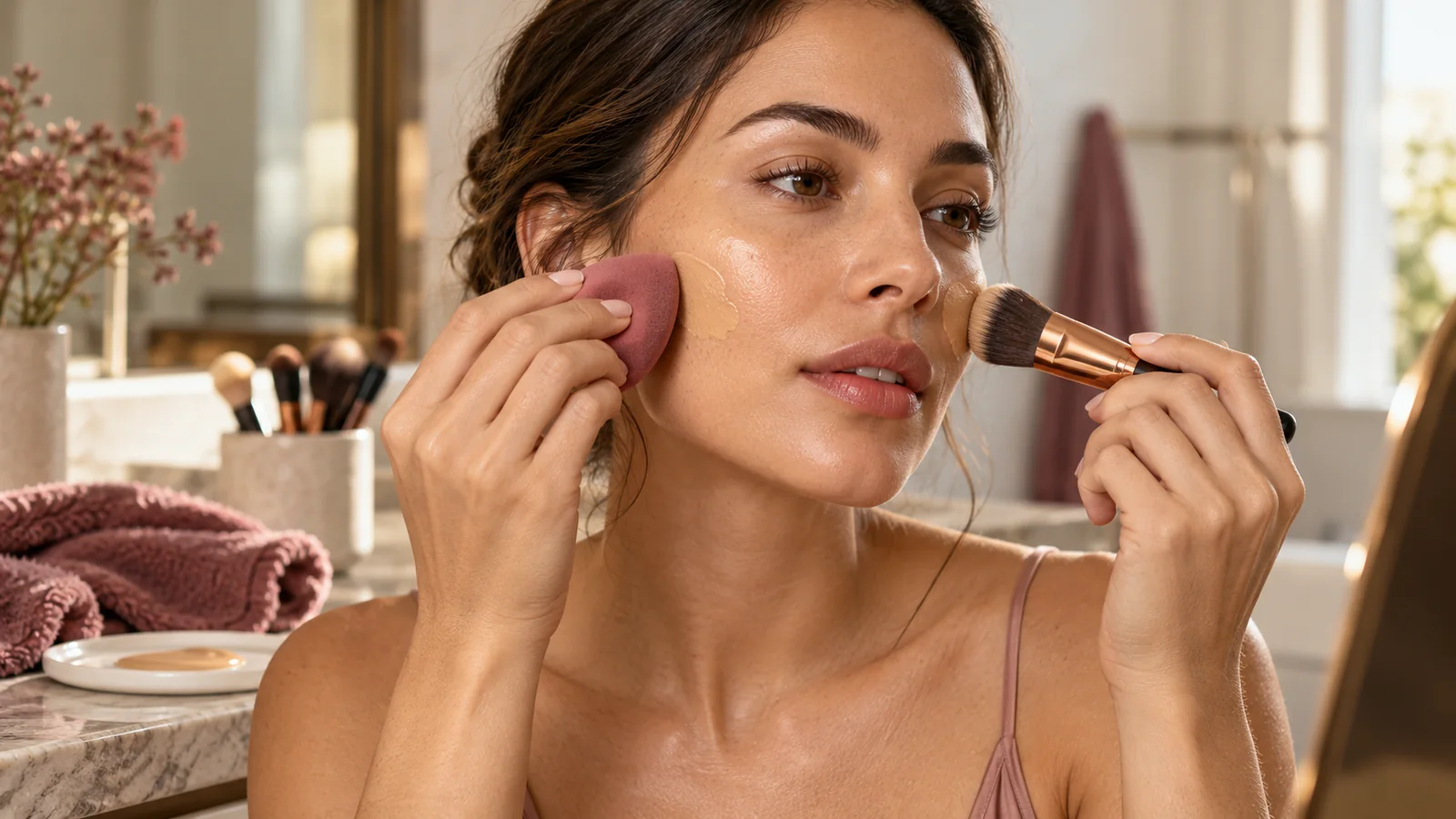
Place a small amount on one cheek or central zone, blend the edge and continue. Dotting long-wear foundation across the whole face first may allow it to set before the tool reaches each area.
Clean each tool on a realistic schedule
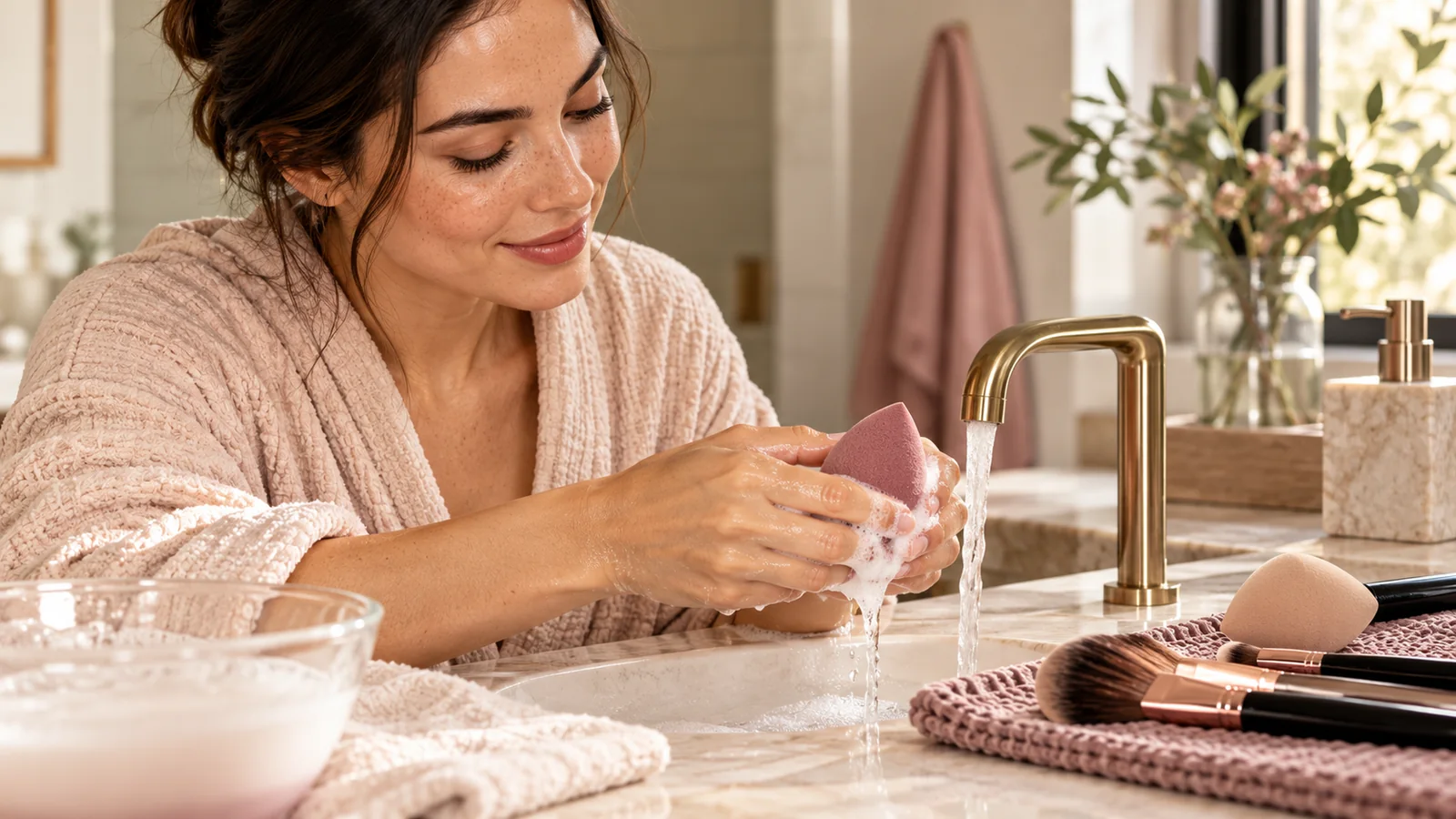
Sponges need frequent washing and complete air drying; liquid-product brushes should be cleaned regularly. Follow the hygiene details in the brush and sponge cleaning guide.
Use both tools when one is better for placement and the other for finishing
A brush can place coverage around the nose and on discoloration, while a sponge presses away excess on cheeks and jaw. For visible texture, this two-tool approach supports the thin-layer method in the textured-skin makeup guide.
Tool comparison
| Priority | Sponge | Brush |
|---|---|---|
| Finish | Diffused | Sheer to full, by density |
| Coverage | Often lighter | Easier to build |
| Precision | Edges and pressing | Shape-dependent placement |
| Care | Wash and fully dry often | Wash by product use |
Frequently asked questions
Does a sponge waste foundation?
It absorbs some product, especially when dry, but controlled damp use can still produce an efficient thin layer.
Why does my brush leave streaks?
It may be overloaded, too flat for the formula or used with long dragging strokes. Use less and finish with light stippling.
Which is better for acne?
Neither treats acne. Use clean tools, avoid excessive friction and choose the one that places coverage without discomfort.
The bottom line
Choose a sponge for diffusion, a brush for controlled deposit, or combine them. The better tool is the one that reaches the desired coverage with less repeated manipulation.