Quick answer: Choose lip liner by undertone, depth and intended contrast. A liner can disappear into lipstick, define its edge or create deliberate dimension; those three jobs require different shade relationships.
Begin with the actual purpose
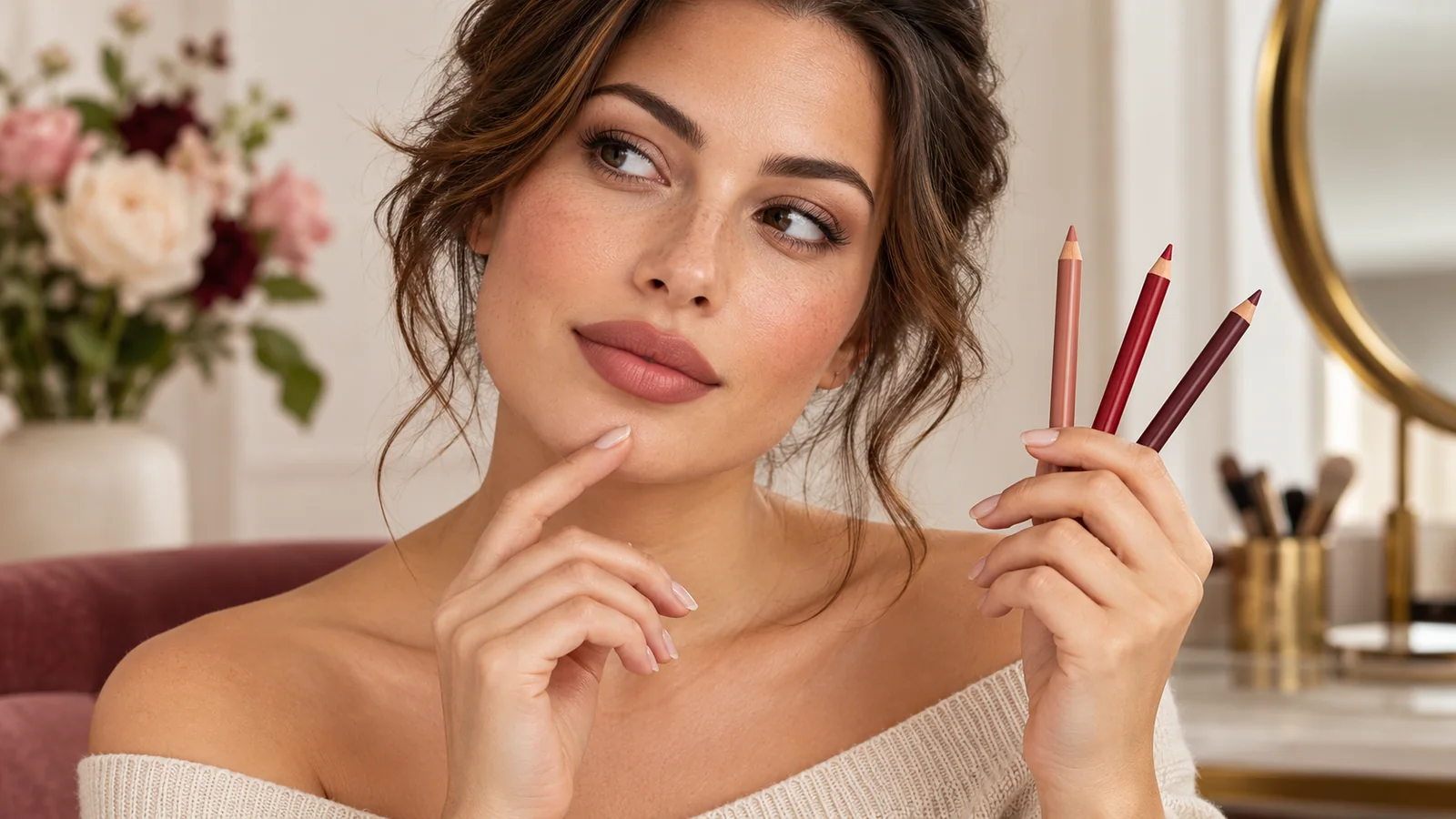
Matching the exact tube color is not always necessary. Formula opacity and your natural lip tone affect the result, so swatch liner beside the lipstick and test the pairing on the lips when possible.
A practical method
Decide whether liner should disappear, define or reshape
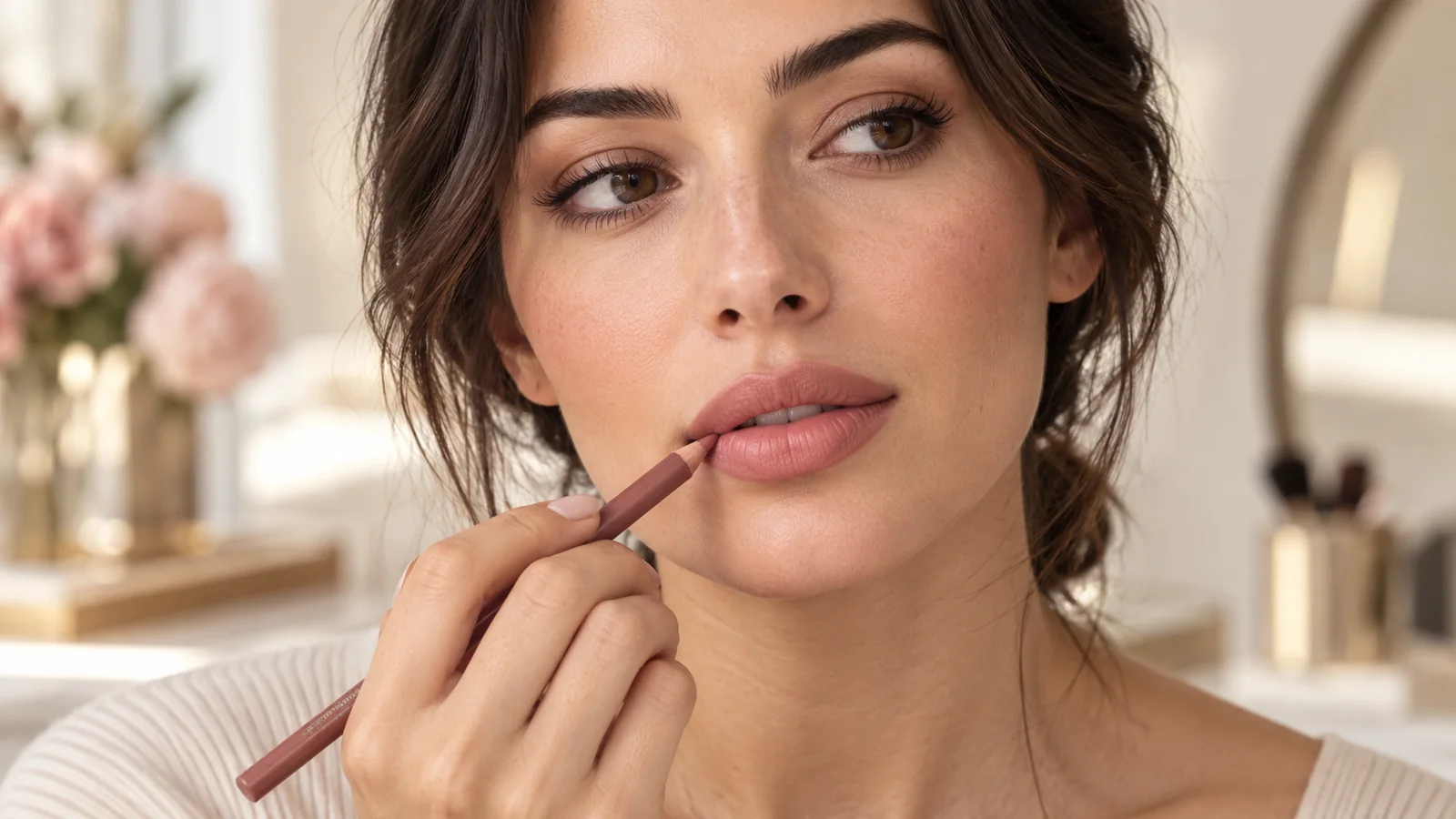
For an invisible edge, match lipstick depth and undertone closely. For definition, choose one level deeper in the same color family. For subtle reshaping, use a shade close to the natural lip border so adjustments do not leave an obvious ring.
Match undertone before trying to match exact color
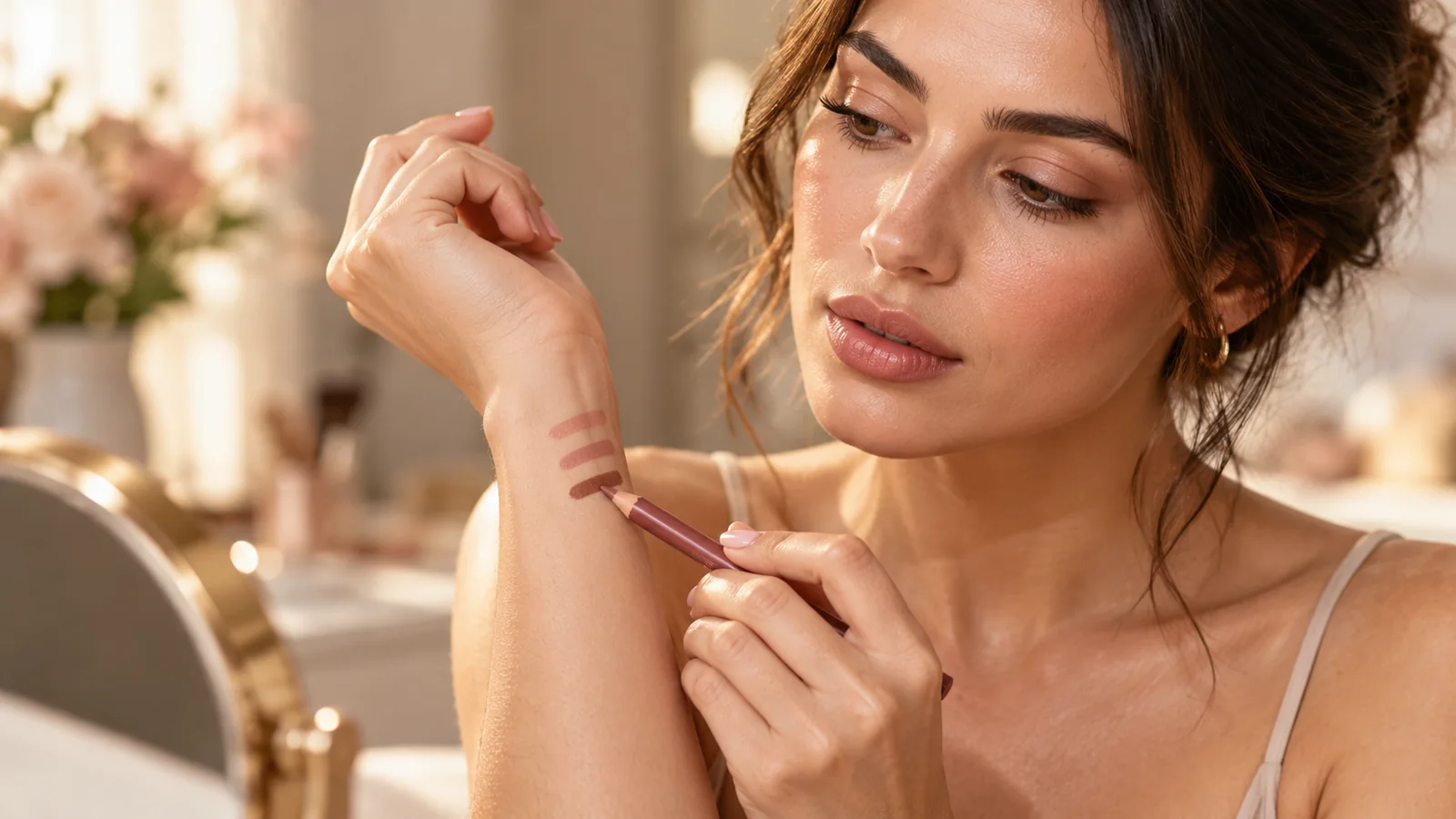
A peachy nude works with warm beige or caramel liner; mauve nude suits rosy or neutral-brown liner. Blue-red lipstick pairs cleanly with neutral or blue-red liner, while orange-red looks coherent with warm red. Deep berry may need plum or wine.
Choose depth according to the lipstick and desired contrast
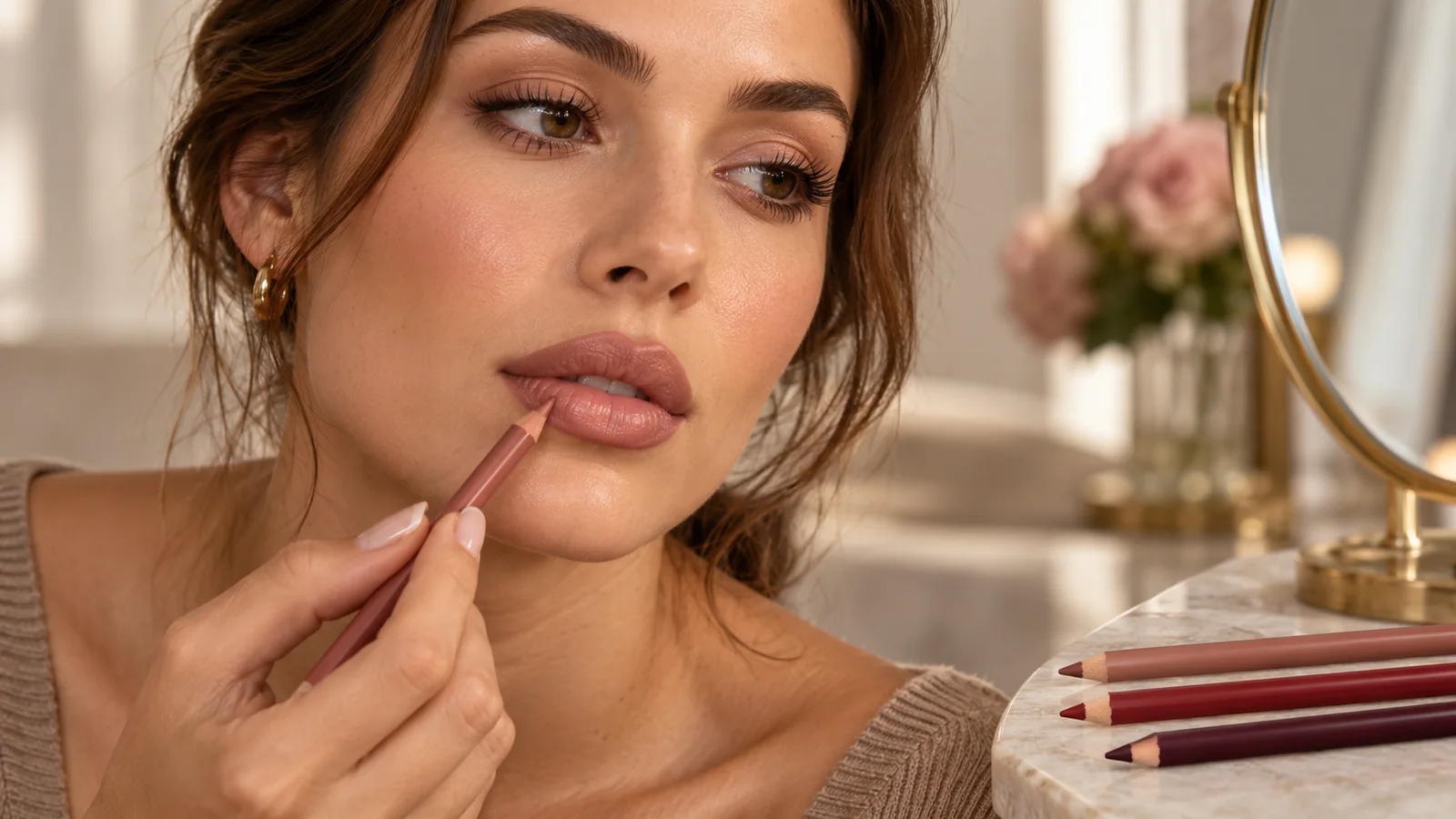
A liner dramatically darker than a pale lipstick creates an intentional gradient, not a seamless match. Blend it inward before adding color. On deeper complexions, a rich brown liner can make a light nude wearable without trying to erase natural lip depth.
Outline with short strokes and relaxed pressure
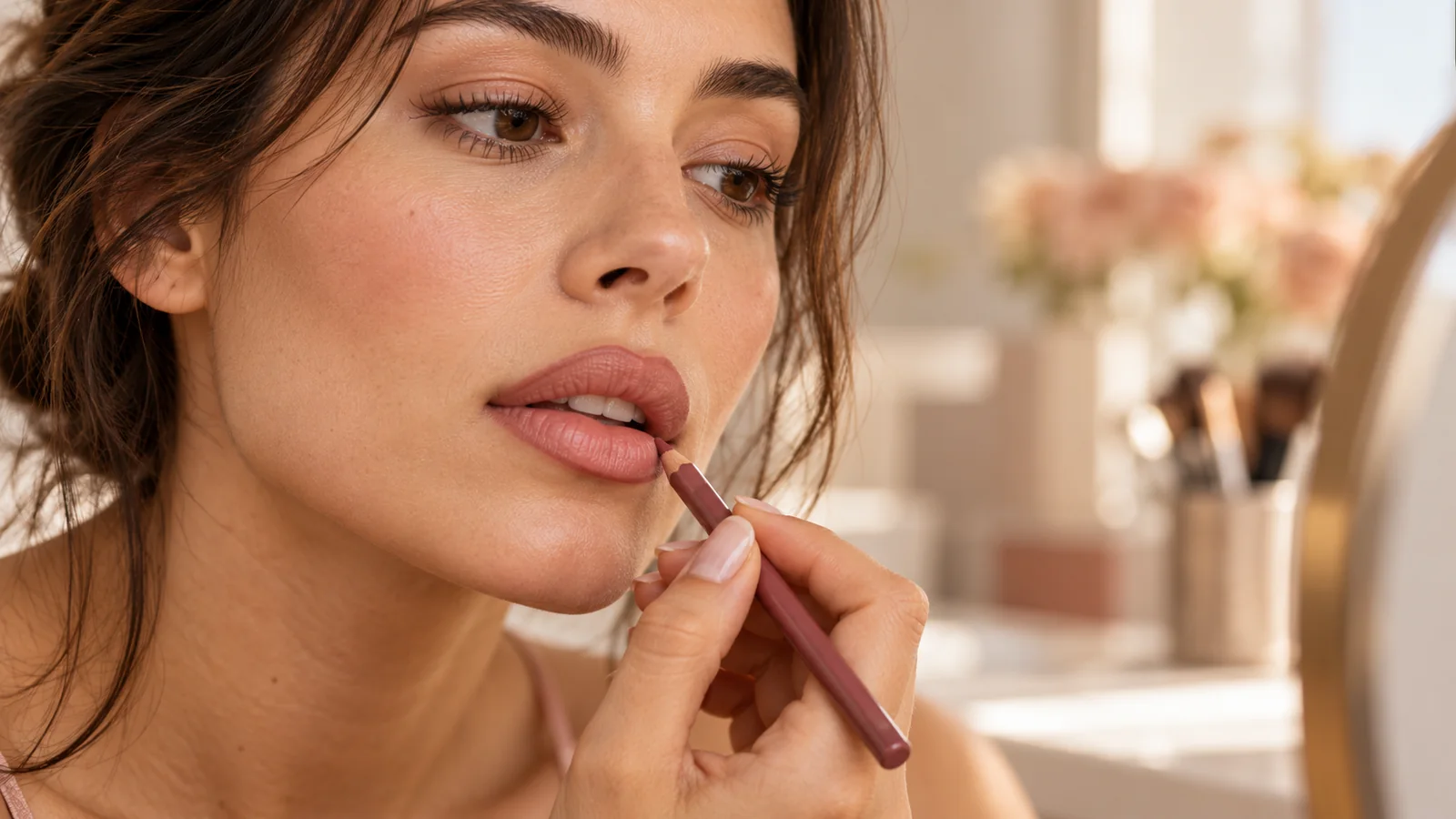
Start at the cupid’s bow and center of the lower lip, then connect toward corners. Keep the mouth relaxed and pencil sharp enough for control but not scratchy. Avoid drawing one continuous hard circle around moving lips.
Blend inward when a hard border is not intended
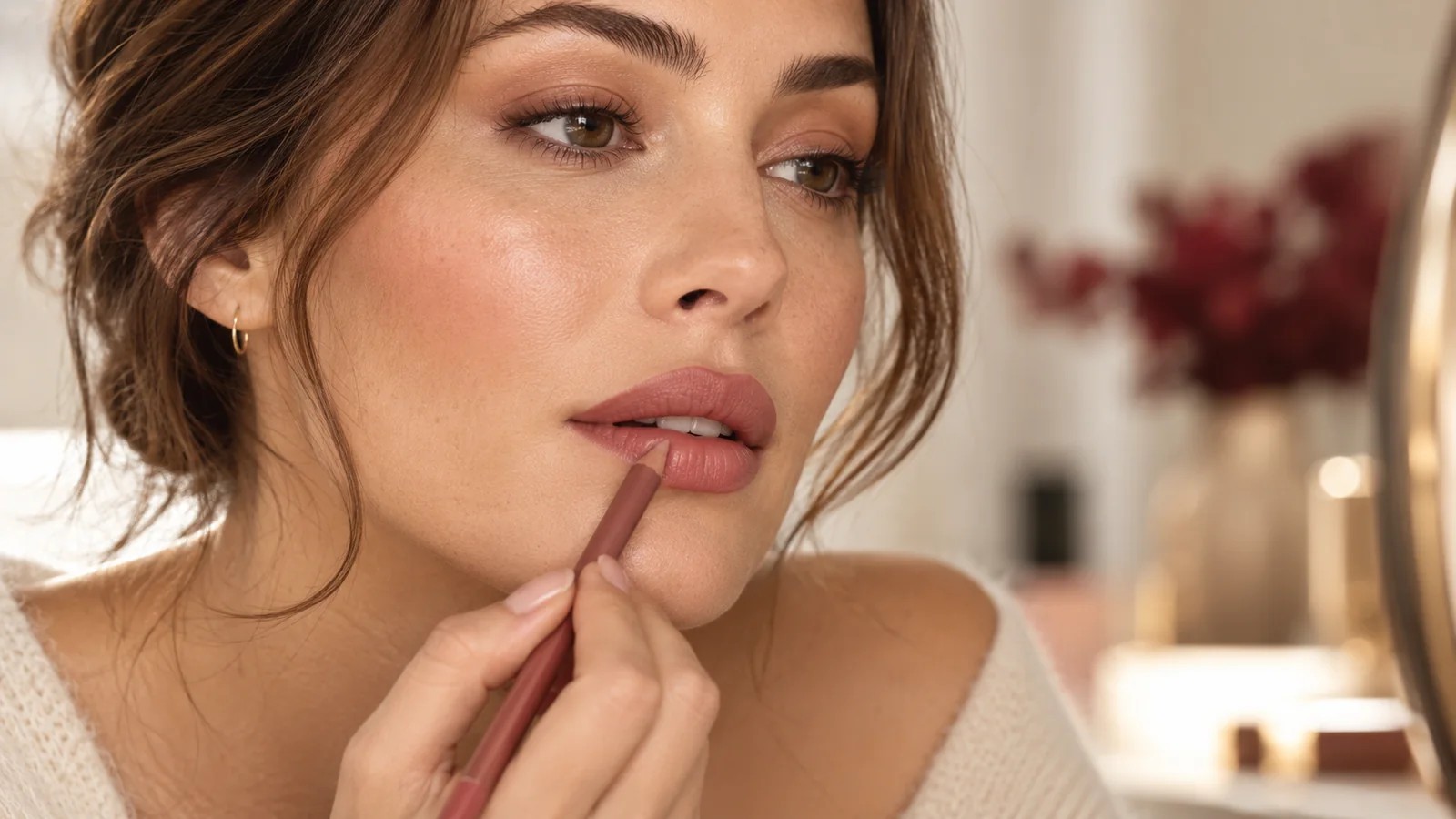
Shade the outer third and soften with a brush or fingertip before lipstick. This creates a stable transition as center color fades. For deep evening looks, apply the controlled edge described in the dark romantic makeup guide.
Check the pairing in daylight before committing to a purchase
Warm store lights can hide orange, gray or purple shifts. Review the dried liner and lipstick together in indirect daylight. Undertone comparison techniques from the undertone guide can help, but personal preference remains decisive.
Shade starting points
| Lip family | Liner starting point |
|---|---|
| Beige or peach nude | Warm beige, caramel or neutral brown |
| Rose or mauve nude | Rose-brown or mauve |
| Classic red | Match warm or blue-red undertone |
| Berry or wine | Plum, burgundy or deep neutral |
Common mismatch clues
A gray border, orange halo or pale ring usually signals undertone or depth mismatch, not poor application alone.
Frequently asked questions
Should liner match lipstick exactly?
Only when a seamless edge is the goal. One level deeper can add useful definition.
Can one brown liner work with every lipstick?
It may be versatile, but undertone and depth can clash with very cool, bright or pale colors.
How can I prevent feathering?
Use a stable liner around the edge, thin lip layers and remove excess balm before application.
The bottom line
Name the liner’s job, then match undertone and choose the amount of contrast. A deliberate transition matters more than finding two products with identical shade names.