Quick answer: Cream blush offers flexible, skin-like color; powder blush offers quick control and dependable layering. Choose according to your base, desired finish and touch-up habits rather than assuming one format is superior.
Start with the surface, finish and setting you actually have
The word cream covers balms, sticks, whipped pots and liquid-cream hybrids, while powder may be sheer, satin or intensely pigmented. Format gives useful clues, but the final finish depends on formula, tool and amount.
Consider the makeup already underneath. Cream usually blends most easily over unset liquid or tint. Powder glides more predictably over a lightly set surface. Either can disturb the base when rubbed repeatedly.
A practical method
Start with the finish you want to see on the skin

Choose cream for a fresh, flexible effect when you enjoy visible skin luminosity. Choose powder when you want a more controlled satin or matte result, or when cheek color tends to fade quickly on your skin. Shimmer level matters independently of format.
Consider how your base products interact with cream or powder
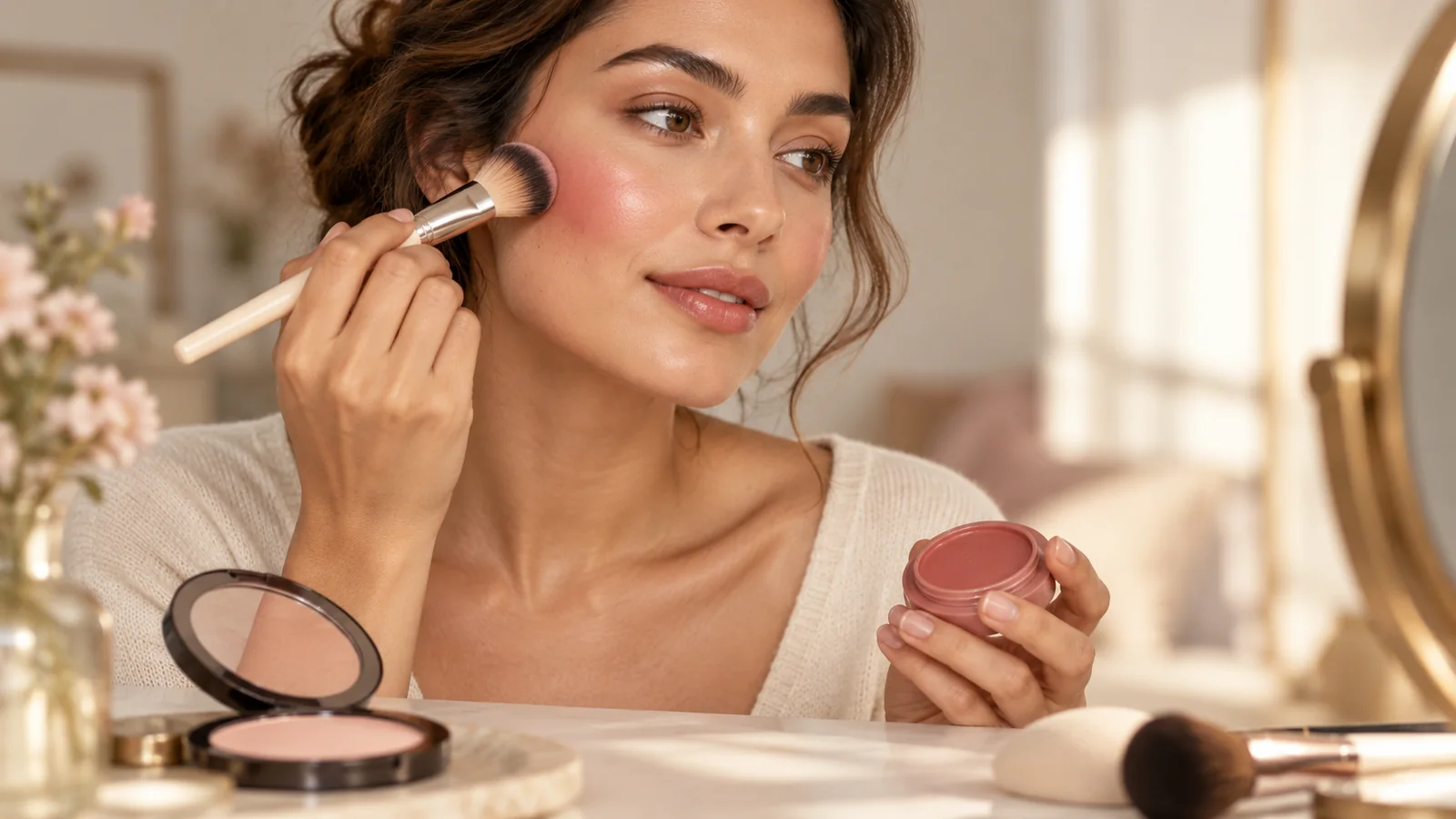
Apply cream before a heavy layer of setting powder so it can merge with the base. If the complexion is already powdered, pick up very little cream and press instead of swiping. Powder blush benefits from a smooth, lightly set base that does not grab pigment in one spot.
Match application tools to the amount of control you need
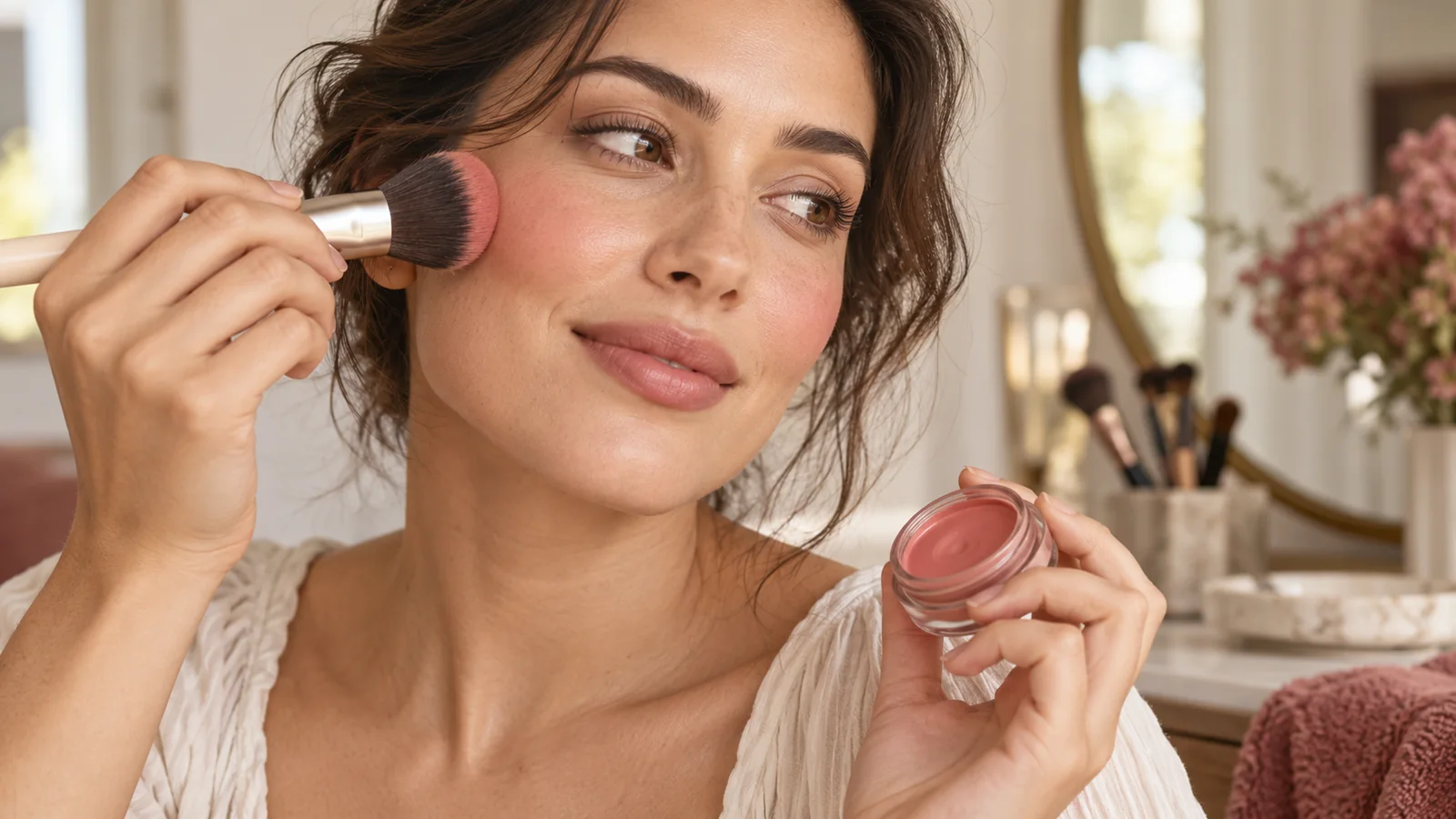
Fingertips warm cream and suit small placements; a synthetic brush gives more reach; a sponge softens an intense edge. For powder, a loosely packed brush lays down less color than a dense one. Always remove excess from the tool before touching the face.
Layer sheer color before increasing intensity
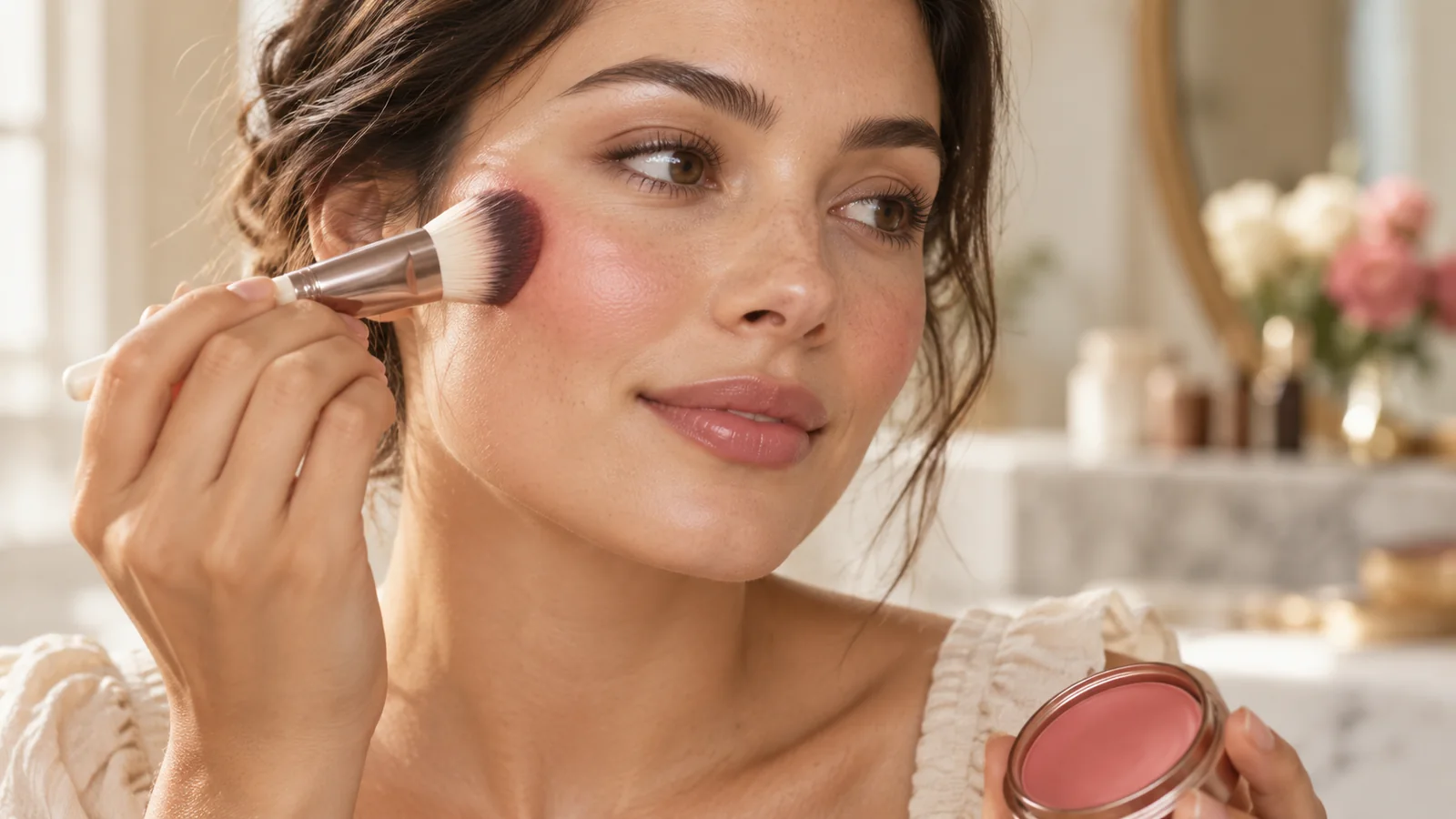
Build one translucent layer, check both cheeks in daylight, then add color where it is missing. Cream can deepen as emollients settle, while a pigmented powder can look stronger than it appears in the pan. Thin layers preserve the underlying base.
Adjust placement for lift, softness or central warmth
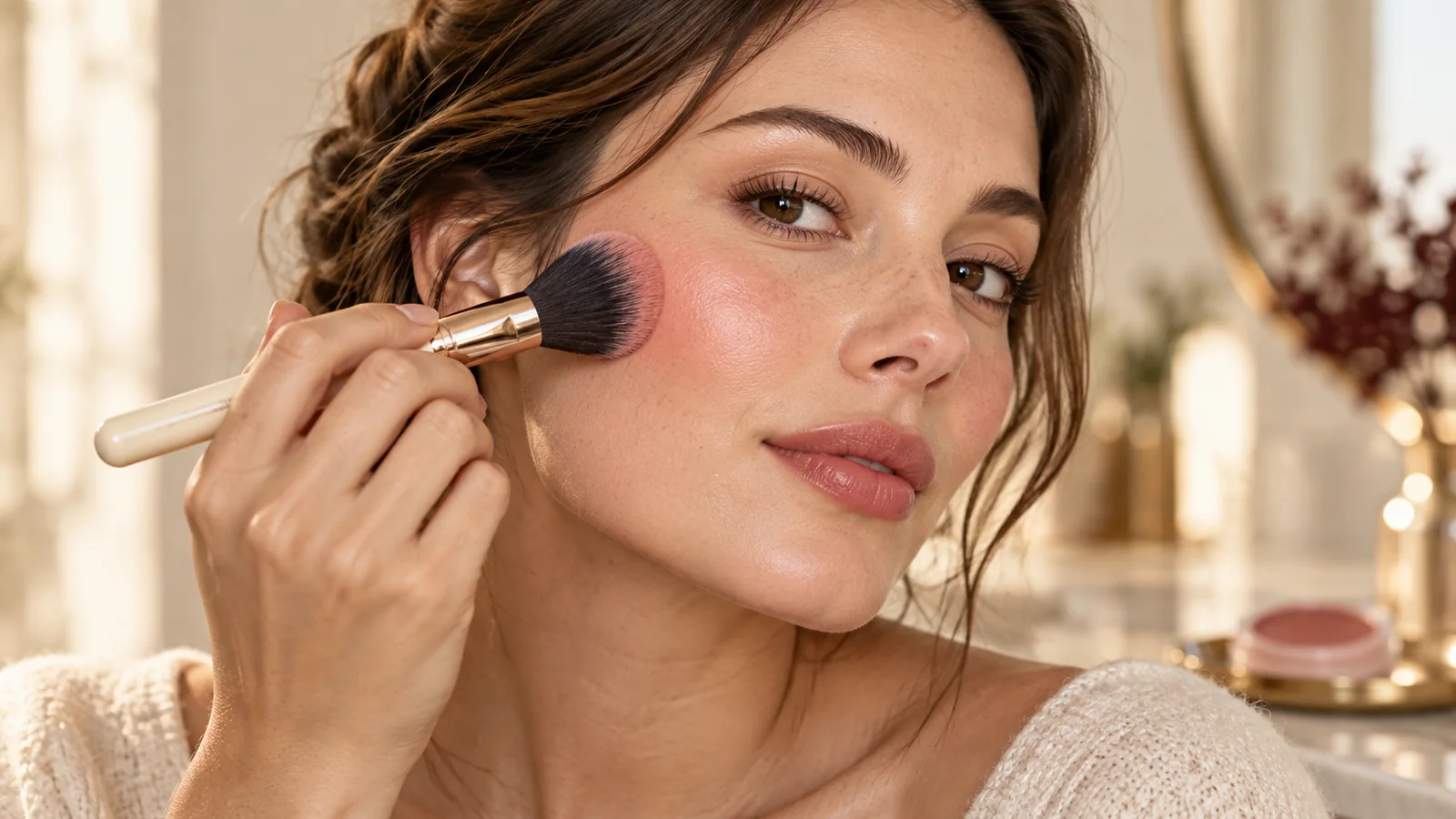
Color placed high and slightly outward reads lifted; color centered on the apples creates a rounder flush; a broad sweep toward the temple feels editorial. The blush placement guide explains these effects without relying on rigid face-shape rules.
Choose a touch-up strategy that will not disturb the base
For cream, tap a trace over faded color with a clean fingertip. For powder, blot oil first and use a soft brush. Do not repeatedly stack powder over moisture or cream over a heavily powdered patch; restore the surface before adding pigment.
When layering both formats makes sense
A sheer cream base topped with a small amount of coordinating powder can extend wear for events or humid conditions. Keep the colors close in undertone so the result remains intentional. This is optional: one well-applied formula is enough for most routines.
Quick comparison
| Priority | Cream | Powder |
|---|---|---|
| Finish | Often dewy or skin-like | Often satin or matte |
| Best base state | Unset or lightly set | Lightly powdered |
| Easy tool | Fingers or synthetic brush | Soft blush brush |
| Touch-up | Press on sparingly | Blot, then dust on |
If you are also adding warmth or structure, separate the role of blush from bronzer and contour so the cheek does not become one indistinct block of color.
Frequently asked questions
Is cream blush only for dry skin?
No. Oily and combination skin can wear cream blush, especially in thin layers or with a light powder set.
Can powder blush look natural on mature skin?
Yes. Use a finely milled formula, a soft brush and restrained placement rather than applying a heavy opaque patch.
Why does my blush disappear?
The layer may be too sheer, the base may remain very emollient, or frequent touching may remove it. Adjust one factor at a time.
The bottom line
Choose cream for pliable luminosity, powder for controlled layering, or a light combination when extra wear matters. Application amount has more influence than the label alone.