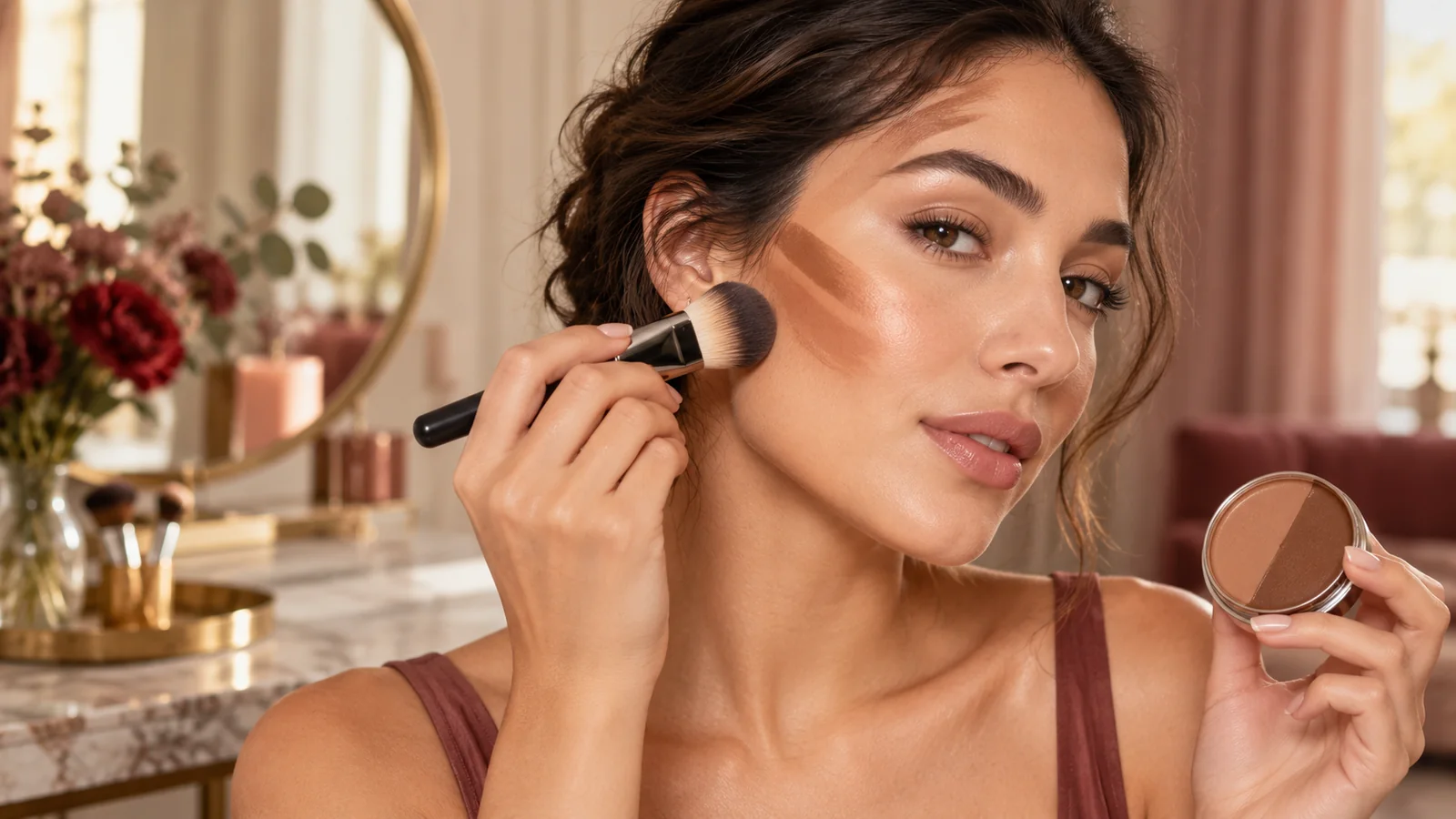
Quick answer: Bronzer adds believable warmth; contour creates the impression of shadow and structure. Keeping those jobs separate makes shade and placement easier, even when one product occasionally performs both.
Define the result before choosing the method
Cream describes texture, not purpose. A warm cream bronzer and a neutral cream contour can come in identical packaging but behave differently because of undertone and placement.
A practical approach
Define whether the goal is warmth, structure or both
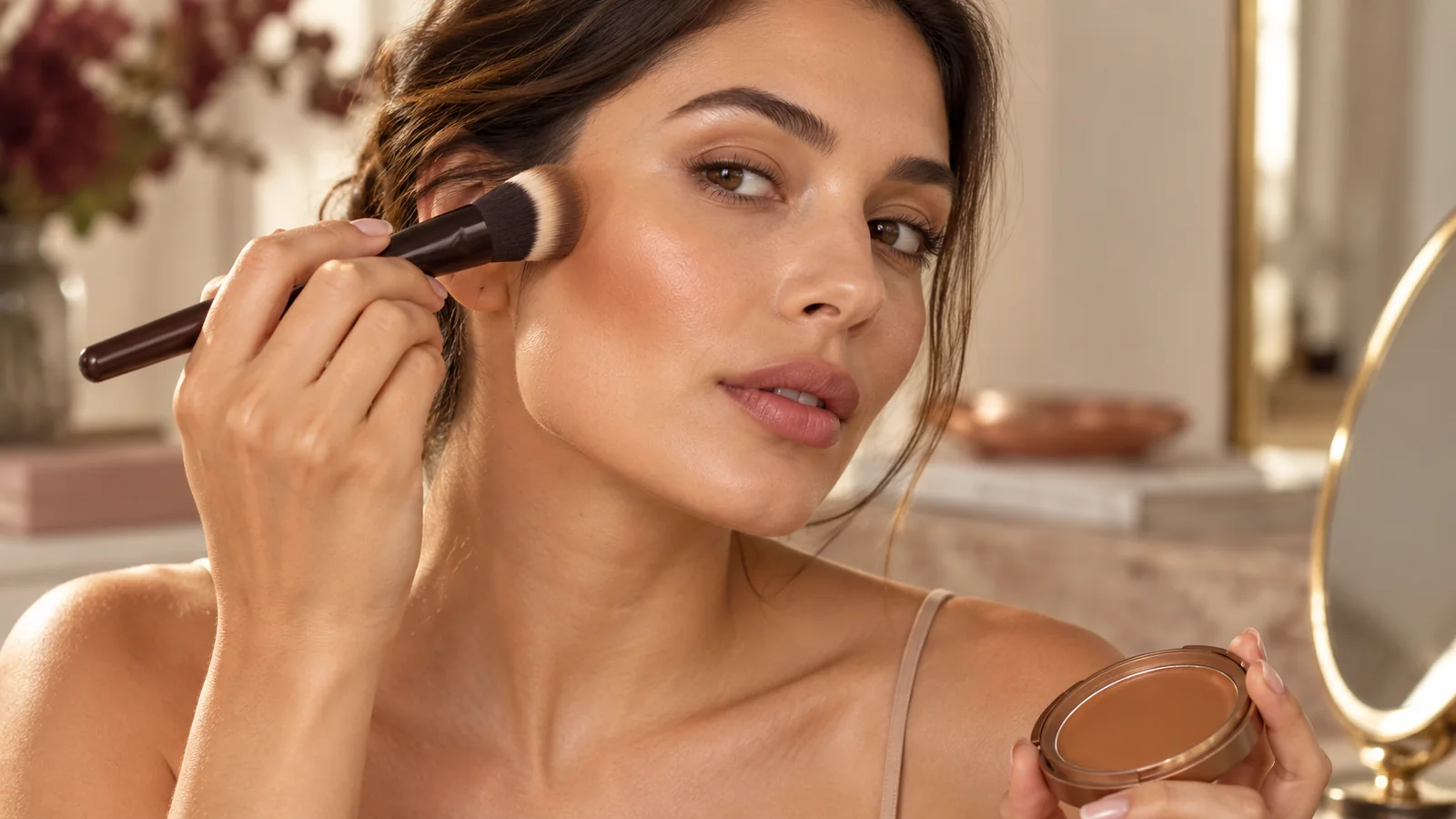
If the face needs sun-touched color, choose bronzer. If the goal is to recede an area visually, choose contour. When both are used, contour first in a restrained zone and bronzer on broader high points.
Choose undertone according to the job of the product
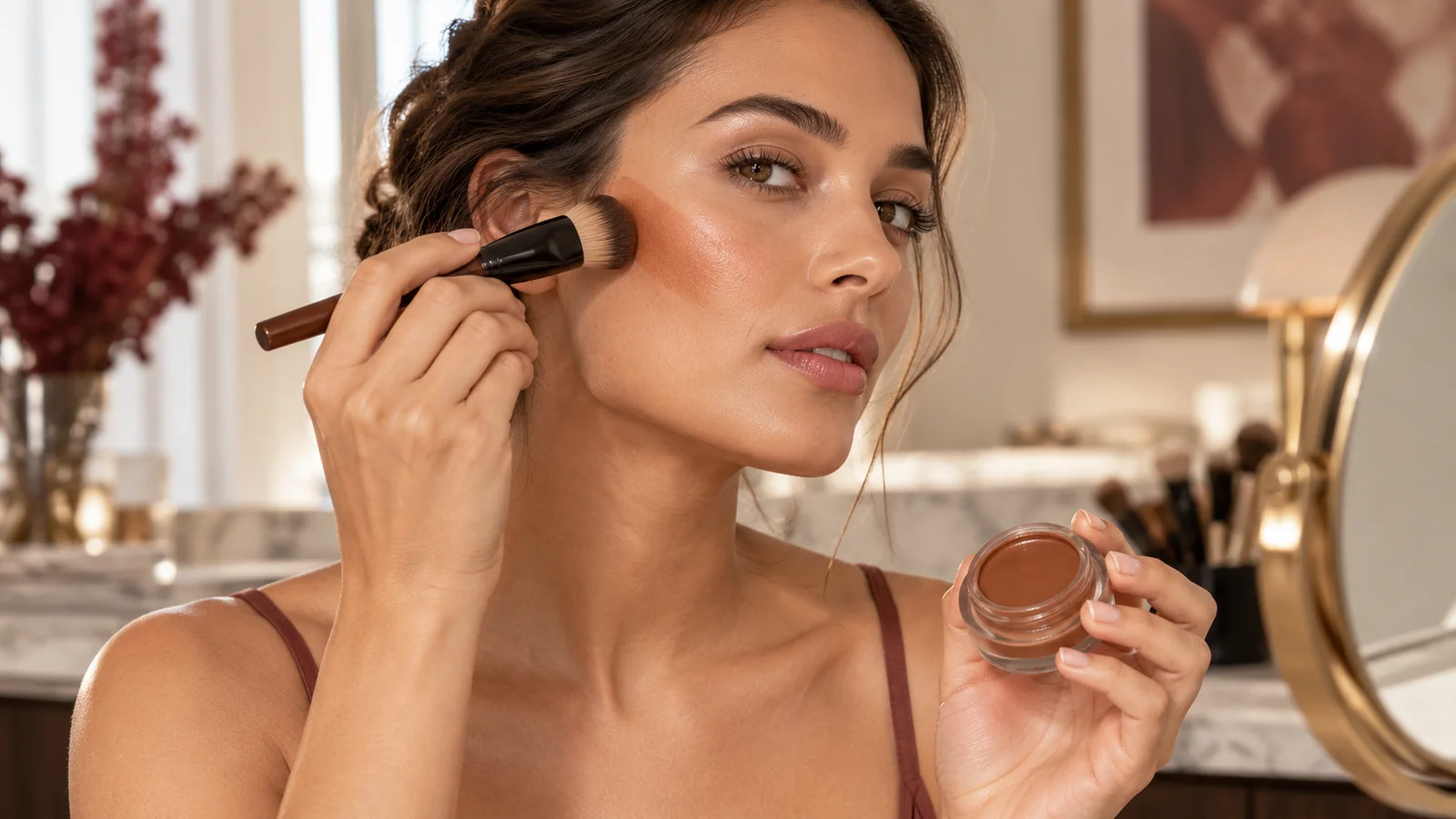
Bronzer may be golden, red-brown or neutral depending on complexion. Contour should resemble a soft natural shadow—often neutral or slightly cool, but not gray on every skin tone. Depth must remain blendable rather than ashy or orange.
Place bronzer where warmth would naturally appear
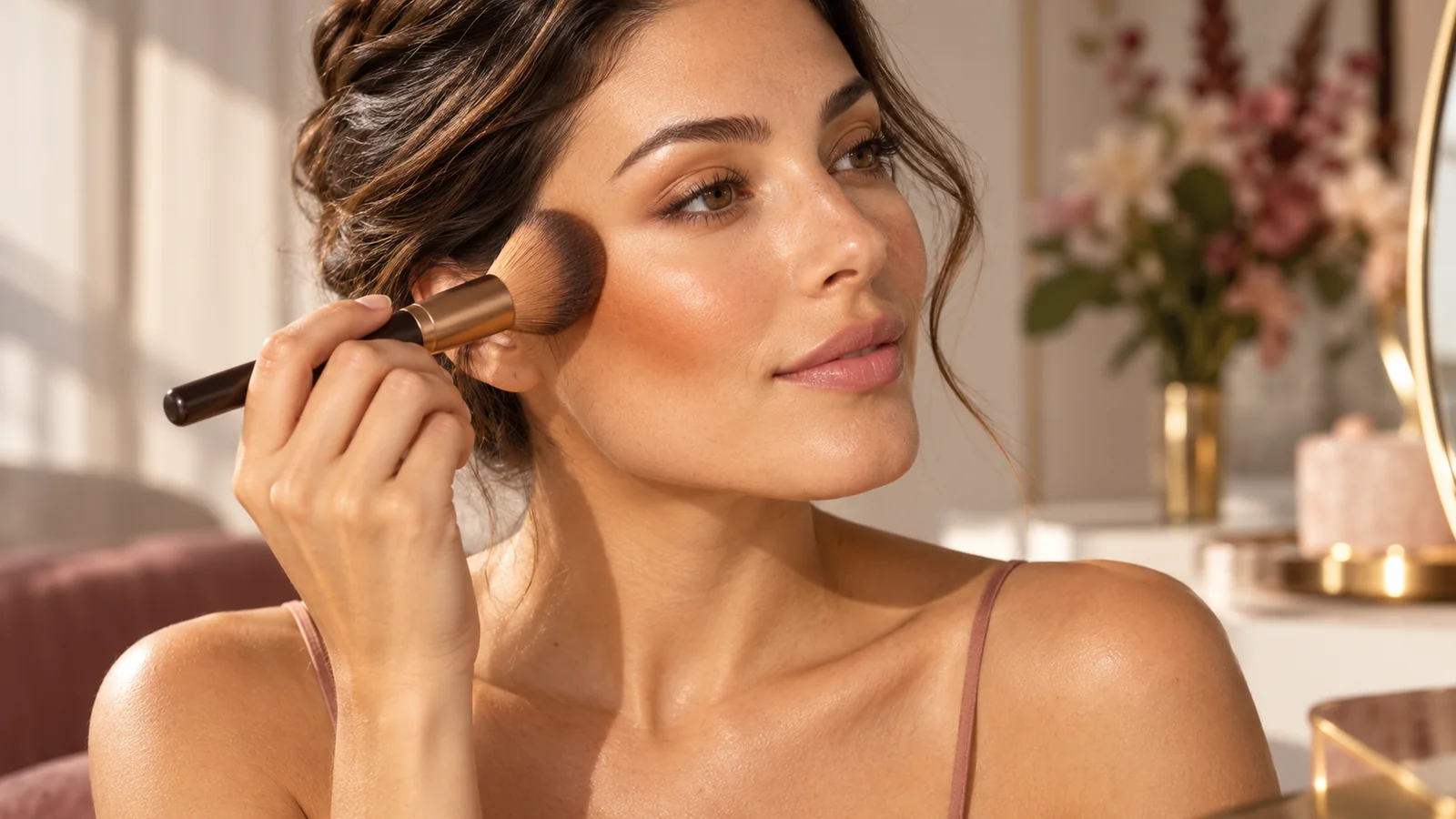
Use a small amount on upper forehead, temples and cheek area exposed to sun, then connect softly. Avoid painting a narrow dark stripe beneath the cheekbone; that placement communicates shadow rather than warmth.
Place contour where a soft shadow would make sense
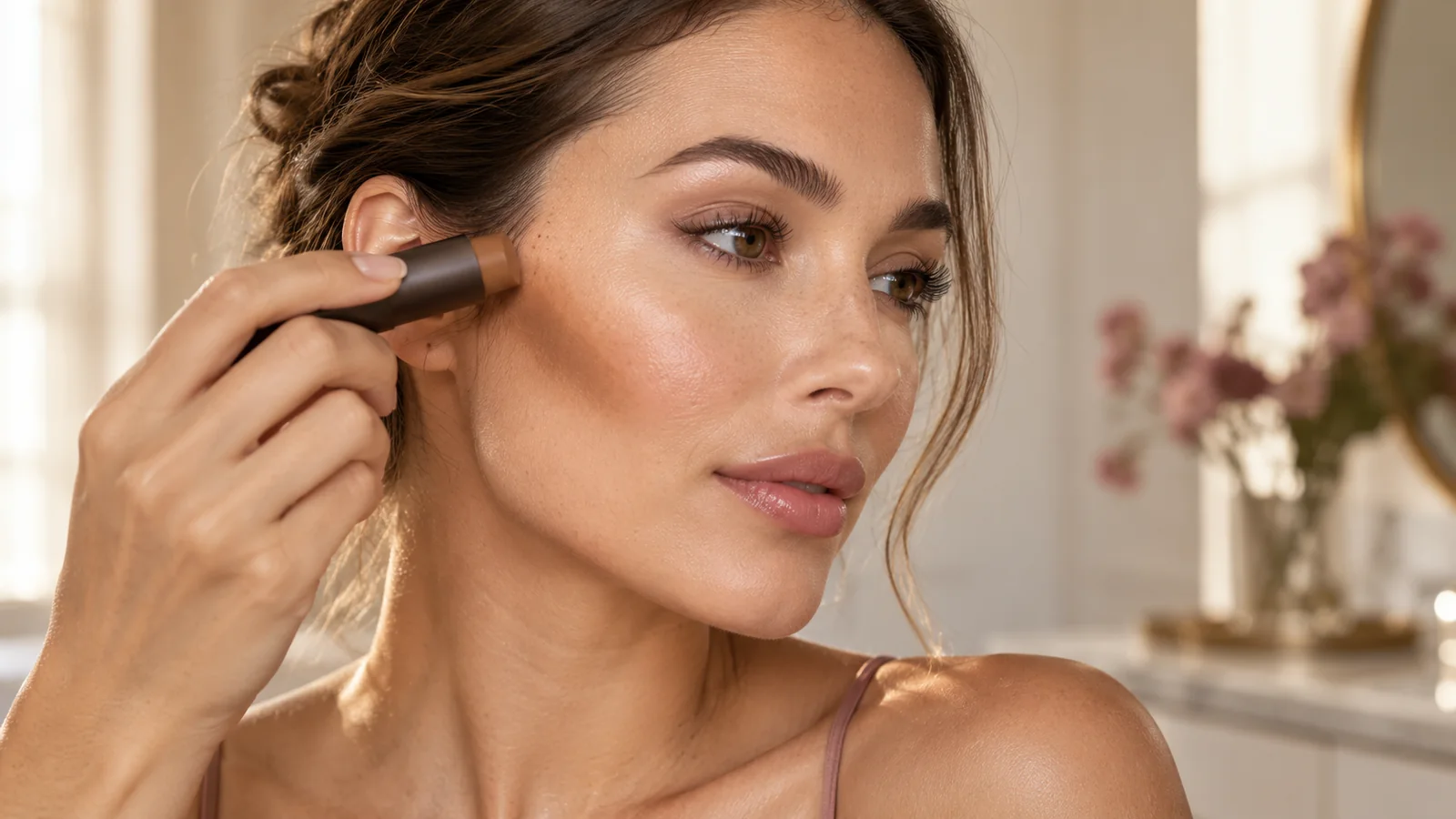
Add contour beneath—not across—the cheekbone, at the temple or jaw where structure is desired. Use the existing anatomy as a map. Nose contour requires a smaller brush and very little product to avoid obvious parallel lines.
Blend edges without moving color across the whole face
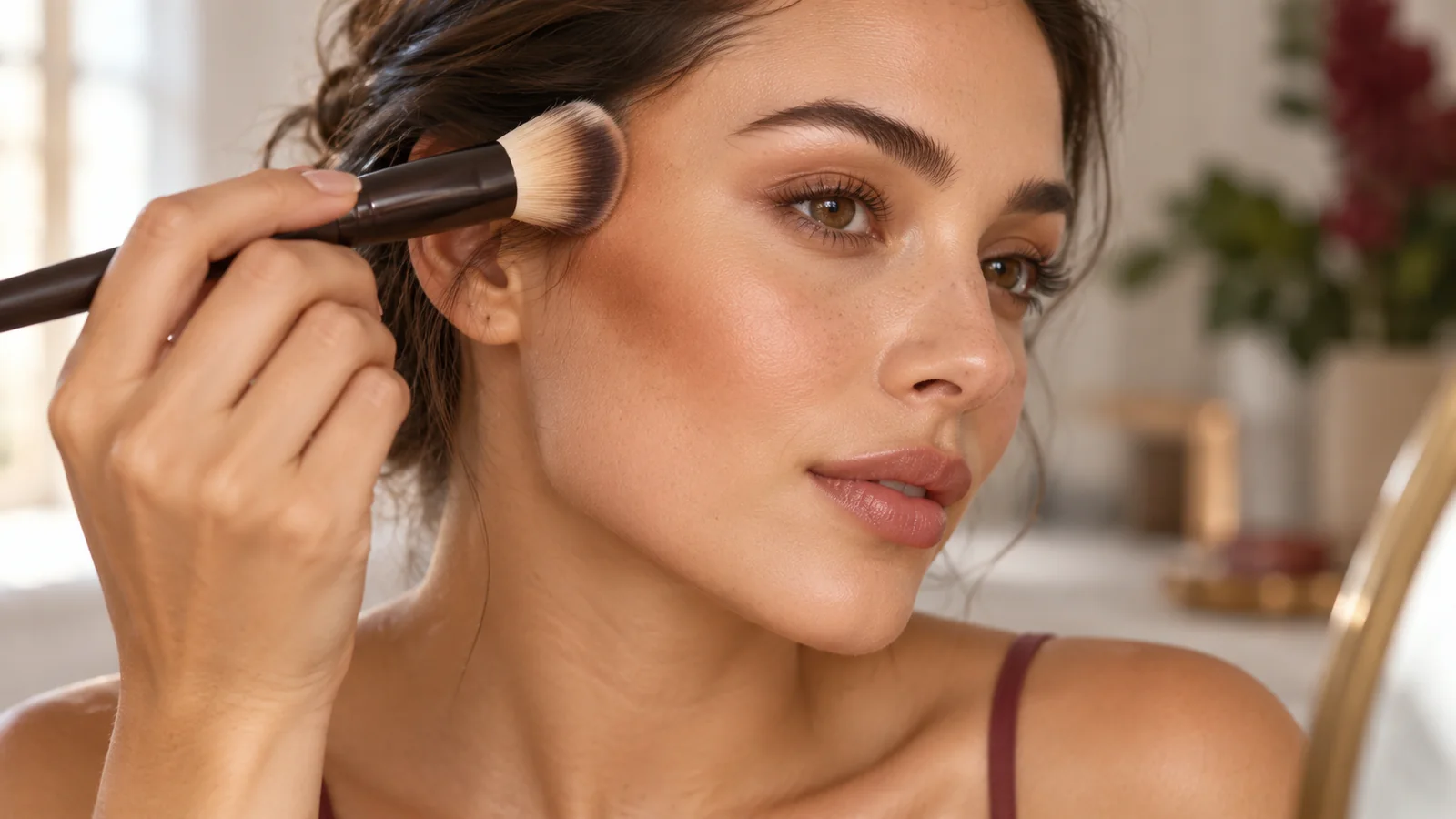
Press and stipple cream upward into its own zone. Large circular motions can merge bronzer, contour and blush into one broad brown patch. Compare cheek color placement in the blush placement guide.
Build gradually and review from conversational distance
Step away from the mirror and turn the head. If color reads before facial structure, diffuse the edge with the base tool rather than adding powder. Good lighting matters; use the makeup lighting guide for a neutral check.
Bronzer and contour at a glance
| Bronzer | Contour | |
|---|---|---|
| Purpose | Warmth | Visual shadow |
| Undertone | Complexion-compatible warmth | Natural shadow tone |
| Placement | Broader high areas | Controlled recessed areas |
| Finish | Matte to luminous | Usually matte or satin |
Frequently asked questions
Can bronzer be used as contour?
A neutral bronzer may provide soft structure, but a very warm shade will read as color rather than shadow.
Should contour be gray?
Not necessarily. It should resemble shadow on your skin, which may be neutral, olive or subtly cool rather than visibly gray.
Do I need both products?
No. Use only the effect you want; many everyday looks need neither or only bronzer.
The bottom line
Name the visual job first. Warm the planes that catch sun, shade only where structure is useful, and keep both layers light enough to preserve the complexion.