Quick answer: Makeup pills when layers roll into small flakes or crumbs instead of forming an even film. The usual triggers are excess product, too much rubbing, a layer that has not set, or several textures competing on the skin. You can often repair the problem without removing the entire face.
What makeup pilling actually looks like
Pilling is different from dry flaking. Dry skin sheds irregular pieces and often feels tight before makeup is applied. Pilling appears as soft rolls or eraser-like crumbs when a product is rubbed. It may happen immediately during application or later where a brush, mask or hand creates friction.
The visible crumbs can come from skincare, sunscreen, primer, foundation or a combination of layers. Popular advice often blames “water-based” and “silicone-based” products, but ingredient lists and formulas are more complex than that shortcut suggests. Amount, film formation and application technique are usually more useful places to begin.
Find the layer that is causing the problem
Identify whether skincare, sunscreen or makeup is forming the pills
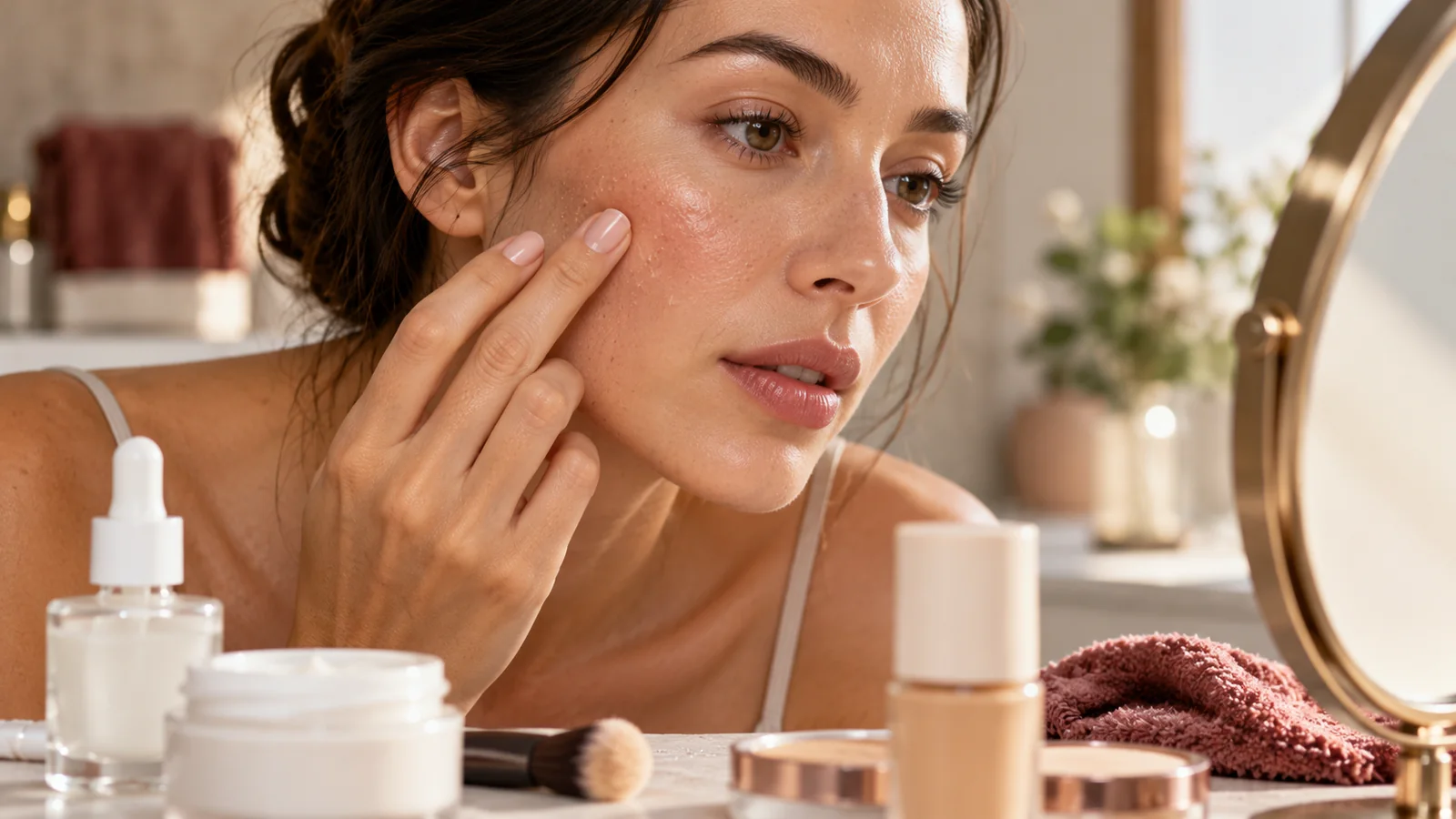
Test the routine in stages on different areas of the face or on separate days. Apply skincare alone and let it settle. On the next test, add sunscreen. Then test primer and foundation. When pilling begins only after one step is introduced, you have narrowed the interaction.
Also test the suspected product by itself. If it pills when rubbed on clean skin, the issue may be its application amount or the way its film sets. If it behaves alone but pills over another layer, the combination or timing deserves attention. A clear order of application, such as the one in the skincare layering guide, makes this troubleshooting easier.
Reduce the number and amount of layered products
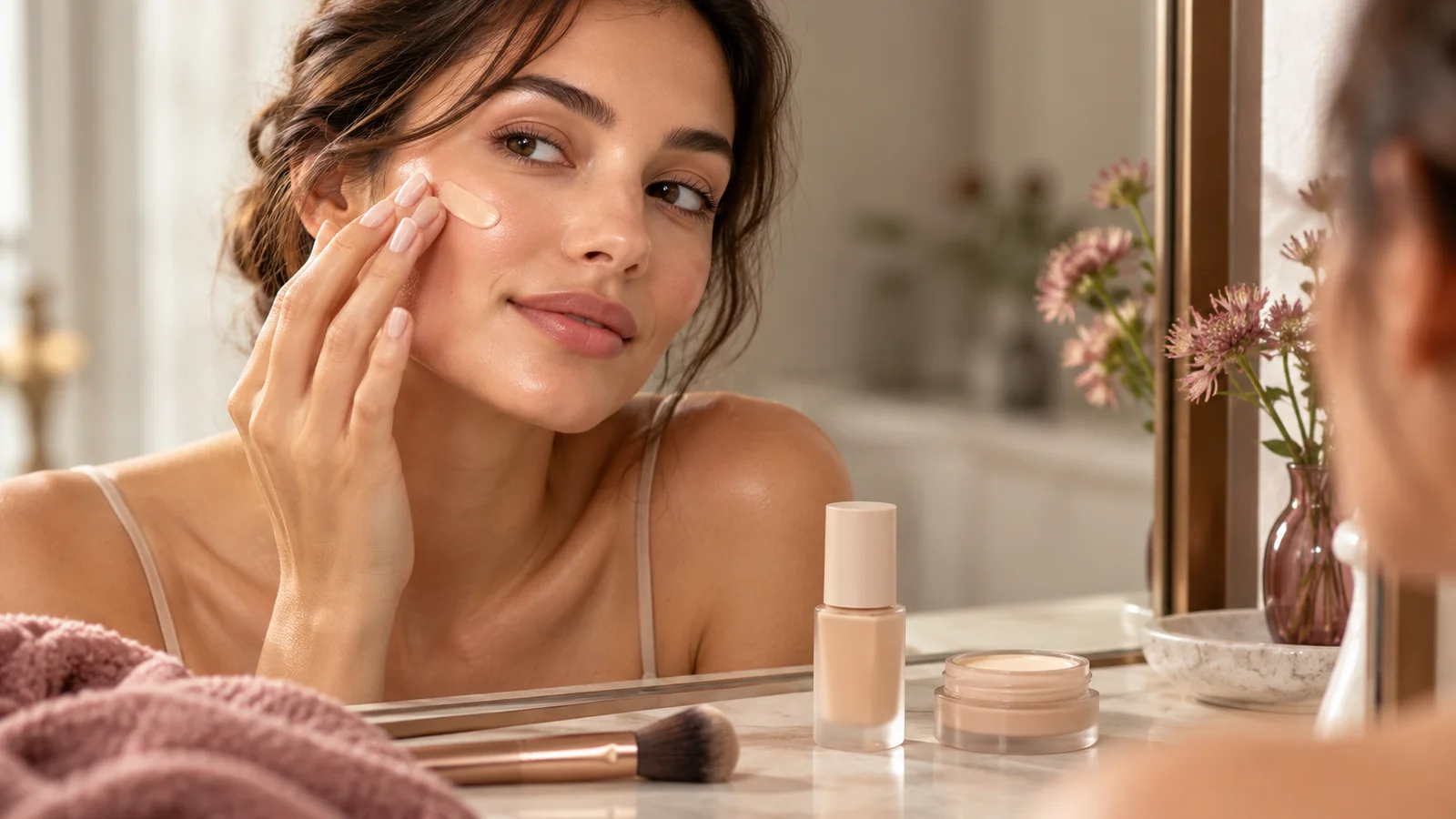
More layers do not automatically create better preparation. A hydrating toner, serum, moisturizer, sunscreen and primer can each work well independently while becoming unstable as a stack. Start with the essential steps, use modest amounts and keep richer products only where the skin needs them.
If a sunscreen is already moisturizing, you may not need a separate heavy cream underneath. If foundation grips well on sunscreen, primer may be optional. Remove one step at a time so you can identify the layer that was creating excess slip or residue.
Allow flexible settling time between incompatible textures

There is no universal waiting period. A useful signal is surface feel: the previous layer should no longer move visibly when you tap it. Thin fluids may need less time than rich creams or high-film-forming sunscreens. Waiting twenty minutes will not rescue an excessive amount, so adjust quantity before extending the routine indefinitely.
Do not confuse “settled” with completely dry or tight. Makeup can blend well over a comfortable surface. The goal is simply to avoid disturbing a wet layer before it has formed an even film.
Press products on instead of repeatedly rubbing
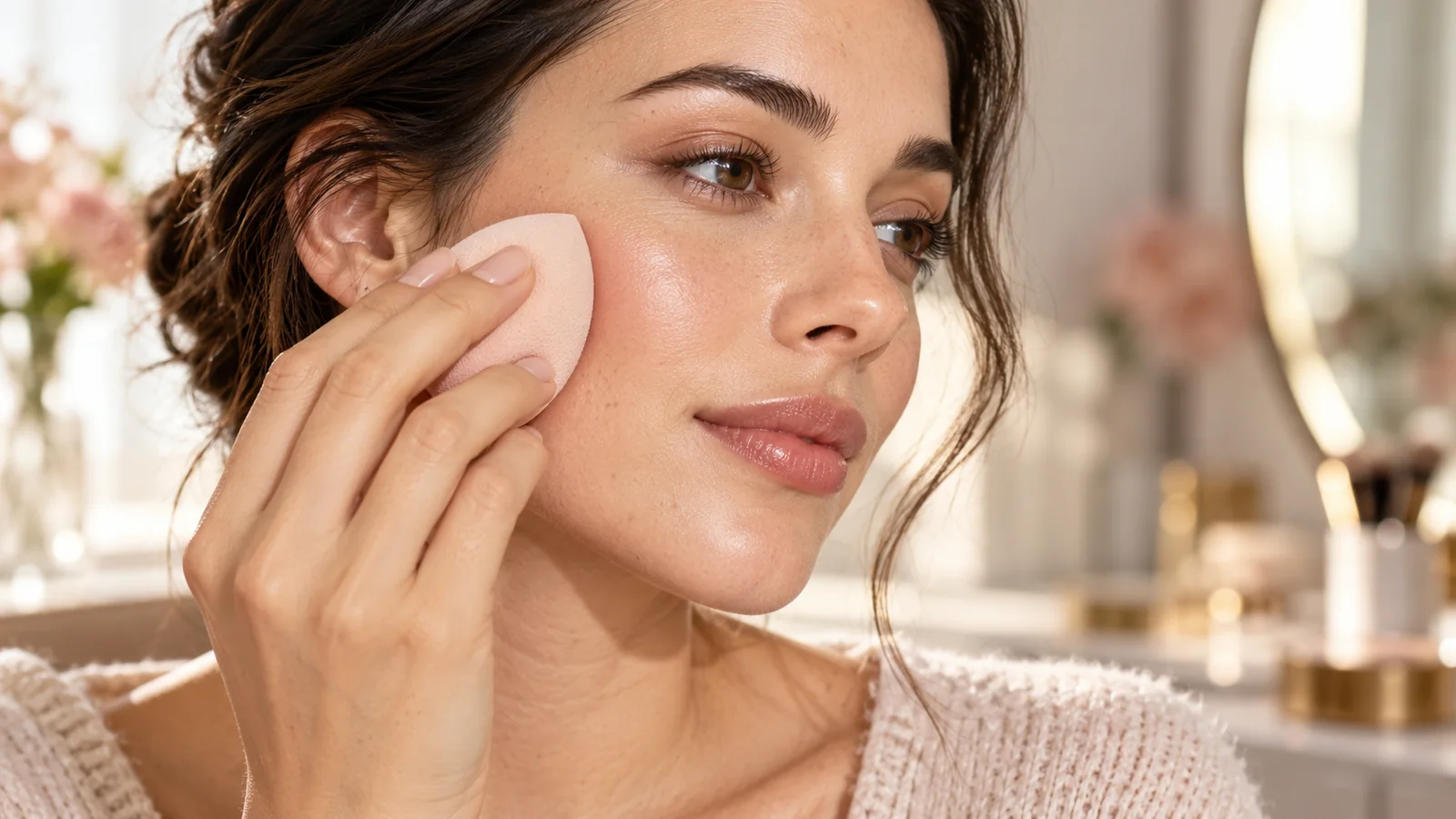
Friction is a common trigger. Spread skincare in a thin layer, then stop rubbing once it is even. For foundation, use short brush strokes followed by gentle stippling, or press with a damp sponge. Avoid polishing the same patch repeatedly after the product begins to set.
Work in sections if the base dries quickly. Apply a small amount to one cheek, blend it, then continue. This gives you more control than dotting foundation across the entire face and repeatedly revisiting half-dry areas.
Repair a small area with a clean damp sponge
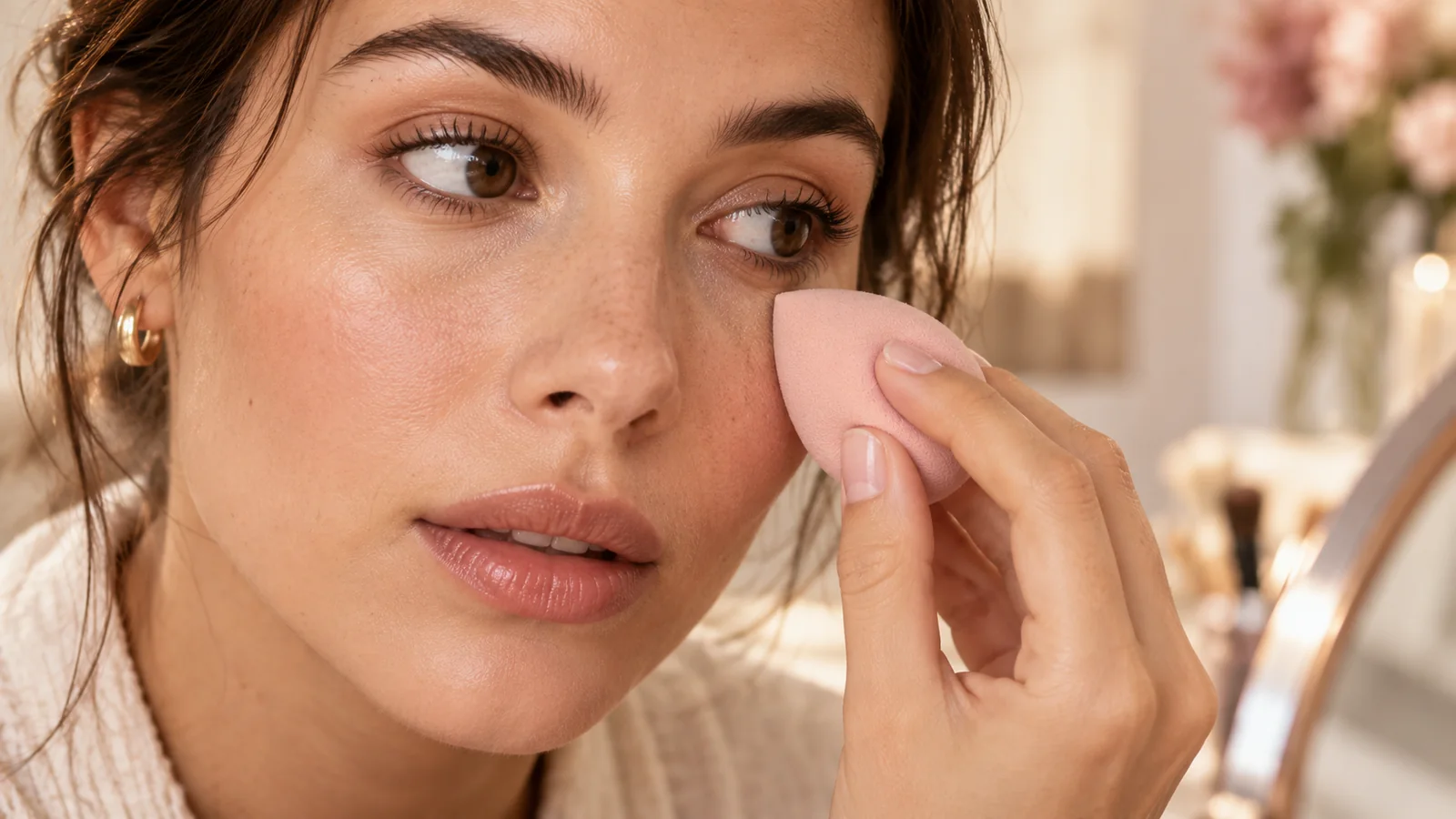
When one area pills, stop rubbing. Lift away loose crumbs with a clean, dry brush or the edge of a tissue. Press the area with a barely damp sponge to smooth the remaining layer. If coverage has disappeared, add a pin-sized amount of foundation only after the surface looks even.
Avoid placing fresh liquid directly over a cluster of pills; the new layer traps the texture underneath. If sunscreen has been disturbed over a meaningful area, remember that cosmetic repair does not guarantee the original sunscreen film remains intact. The guide to reapplying sunscreen over makeup covers the practical trade-offs.
Test the routine in sections before an important event
Try the final combination during an ordinary day before relying on it for a wedding, travel day or long event. Observe the areas around the nose, jaw, hairline and between the brows, where rubbing and overlapping layers often show first.
Test under the same conditions you expect to face. Heat, humidity and mask friction can change how a base wears even when it applied smoothly. If weather is the main challenge, use the separate guide to making makeup last in humid conditions rather than solving every wear issue with more primer.
Match the fix to the symptom
| What you see | Likely trigger to test first | Practical adjustment |
|---|---|---|
| Pills during skincare | Too much product or prolonged rubbing | Use less and stop once the layer is even |
| Pills when sunscreen is added | Unsettled or overly rich layers beneath | Simplify preparation and test sunscreen alone |
| Pills only with foundation | Friction, primer interaction or excess base | Press on a thinner layer and test without primer |
| Pills around dry patches | Flaking mixed with product residue | Address dryness gently instead of scrubbing before makeup |
| Pills later in the day | Touching, mask friction or layered touch-ups | Lift loose texture before applying any fresh product |
Common pilling myths and mistakes
- “Silicone and water never mix.” Finished cosmetics contain emulsifiers, film formers and many ingredient types; label categories alone do not predict every interaction.
- “Longer waiting fixes everything.” Excess product may remain unstable regardless of waiting time.
- “Scrub the flakes away first.” Aggressive exfoliation can make the surface more irritated and uneven.
- “More primer creates more grip.” An additional film can increase rolling when the layers are already crowded.
- “Powder hides pills.” Powder can set a smooth base, but it usually makes existing crumbs more visible.
Frequently asked questions
Why does makeup pill only around my nose?
The nose receives extra rubbing during skincare and base application, and product often collects beside the nostrils. Use less moisturizer and foundation there, press rather than polish, and keep powder light until the surface is smooth.
Can sunscreen pill even when no makeup is applied?
Yes. It may be reacting to products underneath, applied in an unevenly heavy layer or rubbed after its film starts to form. Test the sunscreen on clean, moisturized skin and follow its directions before deciding that the formula is incompatible with your routine.
Should I remove everything when pilling starts?
Not when the problem is confined to a small area. Lift the loose material, smooth what remains and replace only the coverage that was removed. A widespread problem is usually faster to correct by restarting with fewer, thinner layers.
The bottom line
Treat pilling as a layering and friction problem, not a reason to buy an entirely new routine. Isolate the step where rolling begins, reduce unnecessary layers and press makeup onto a settled surface. Once you know which combination behaves well, keep that sequence simple and repeatable.