Quick answer: Azelaic acid is used in cosmetic and prescription products for redness- and blemish-focused concerns, but beginners should distinguish strengths, follow the exact label and introduce it slowly.
Understand the concern before choosing a product
Persistent facial redness can have many causes, including rosacea, irritation and dermatitis. A cosmetic guide cannot diagnose them. Seek professional evaluation when redness is painful, sudden, accompanied by eye symptoms or steadily worsening.
A practical approach
Understand why azelaic acid appears in redness-focused routines
Azelaic acid has uses in dermatology and is also included in over-the-counter cosmetic formulas. Claims and concentrations differ by country and product. Do not assume a cosmetic strength will treat a medical condition or produce a guaranteed timeline.
Choose an appropriate over-the-counter format and read directions
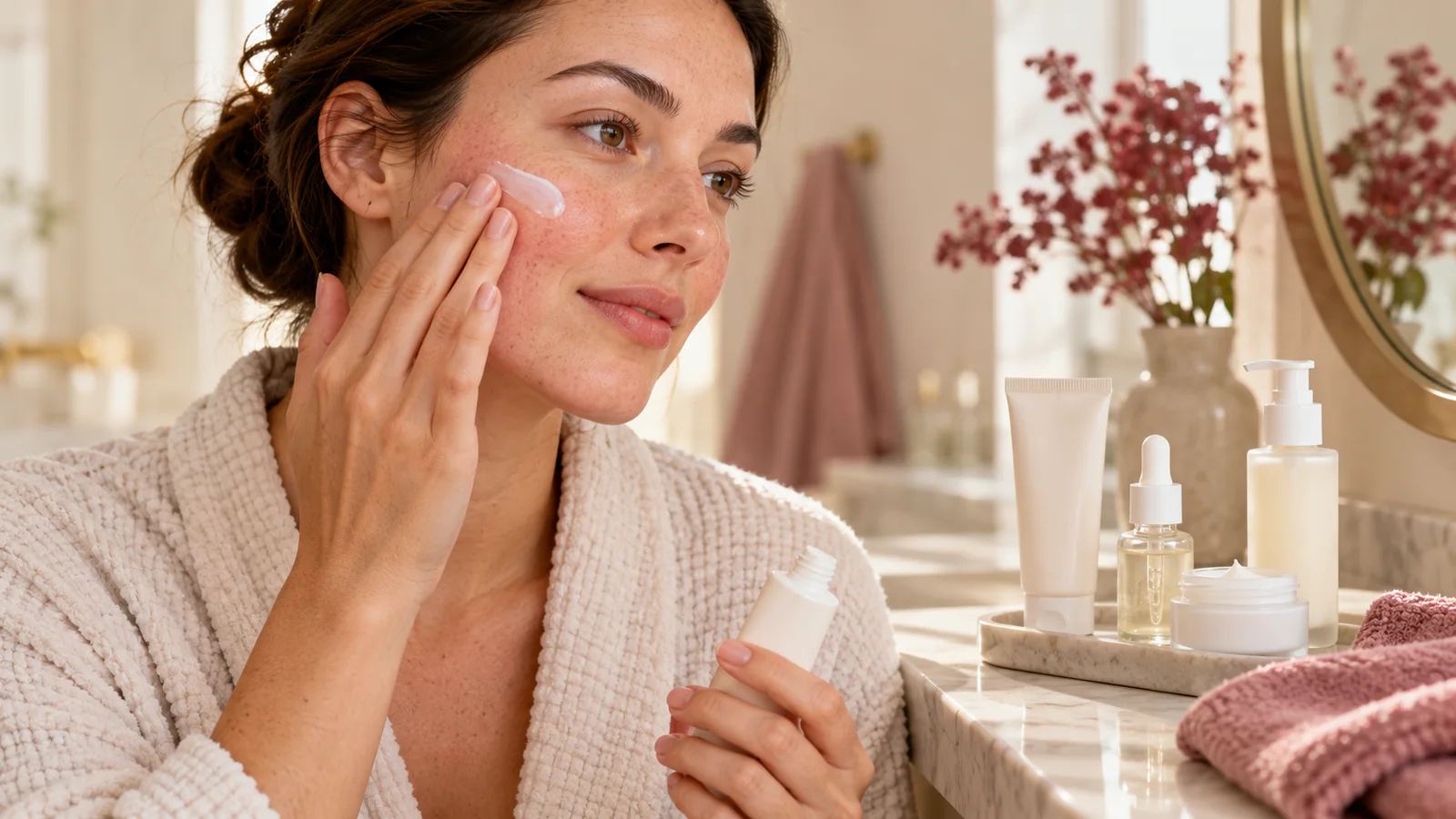
Creams, gels and suspensions spread differently and may include other active ingredients. Begin with a plainly labeled product whose application area, amount and frequency are clear. Prescription products should be used under the prescriber’s instructions.
Patch test and begin with a modest frequency

Use the process in the patch-test guide, then apply on a limited schedule if permitted by the label. Introduce no other new active at the same time, so itching or stinging has a traceable source.
Use moisturizer to support comfort
Apply moisturizer before or after according to texture and directions. Buffering may reduce direct intensity for some users. Avoid putting azelaic acid on broken, freshly scrubbed or otherwise irritated skin.
Keep sunscreen consistent during the day

Sunscreen does not make azelaic acid work, but it supports a redness- and discoloration-conscious routine. Choose a broad-spectrum formula you can apply evenly; compare options in the mineral and chemical sunscreen guide.
Consult a dermatologist for severe, persistent or unexplained redness
Stop and seek advice for swelling, hives, eye involvement or significant burning. A dermatologist can identify whether azelaic acid is appropriate and distinguish rosacea from contact irritation or another condition.
A low-variable introduction plan
- Keep cleanser, moisturizer and sunscreen stable.
- Patch test the azelaic product.
- Use a small label-directed amount on planned days.
- Observe comfort before increasing frequency.
- Pause other optional irritants if sensitivity develops.
Expectations to avoid
Azelaic acid cannot promise instant redness removal, permanent pore changes or identical results for every skin tone. Evaluate gradual appearance and comfort without treating irritation as proof of activity.
Frequently asked questions
Is tingling normal?
Brief mild sensation can occur with some formulas, but persistent burning or escalating redness is a reason to stop.
Can I combine it with retinol?
Some routines do, but beginners should establish tolerance separately and avoid introducing both together.
Can it be used every day?
Follow the exact product directions and your tolerance; daily use is not an automatic starting requirement.
The bottom line
Introduce azelaic acid as one controlled variable within a gentle routine. Accurate diagnosis and tolerability matter more than forcing a popular active onto persistent redness.