Quick answer: Setting powder controls surface moisture and movement in selected areas; setting spray can merge layers, alter finish or improve wear depending on its formula. They are complementary tools, not interchangeable guarantees.
Define the result before choosing the method
Neither product makes every cosmetic waterproof. Read claims carefully: a dewy finishing mist, alcohol-based long-wear spray and hydrating facial mist have different jobs despite similar packaging.
A practical approach
Understand what powder and spray can realistically change
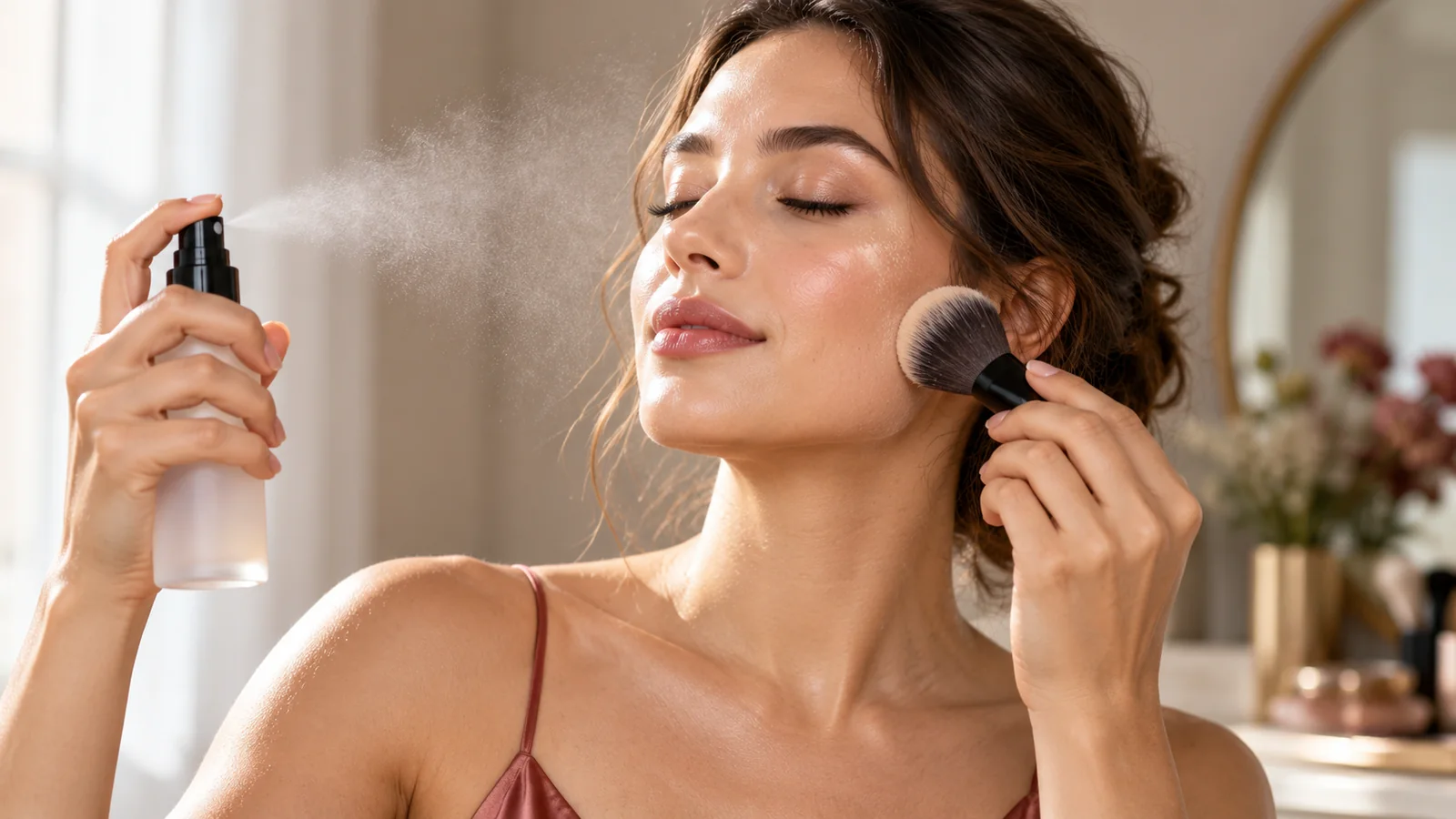
Powder absorbs oil and reduces tack, which helps prevent transfer where makeup moves. Spray distributes a liquid film over the surface; some formulas improve cohesion or longevity, while others mainly adjust a powdery appearance.
Use powder for targeted surface control
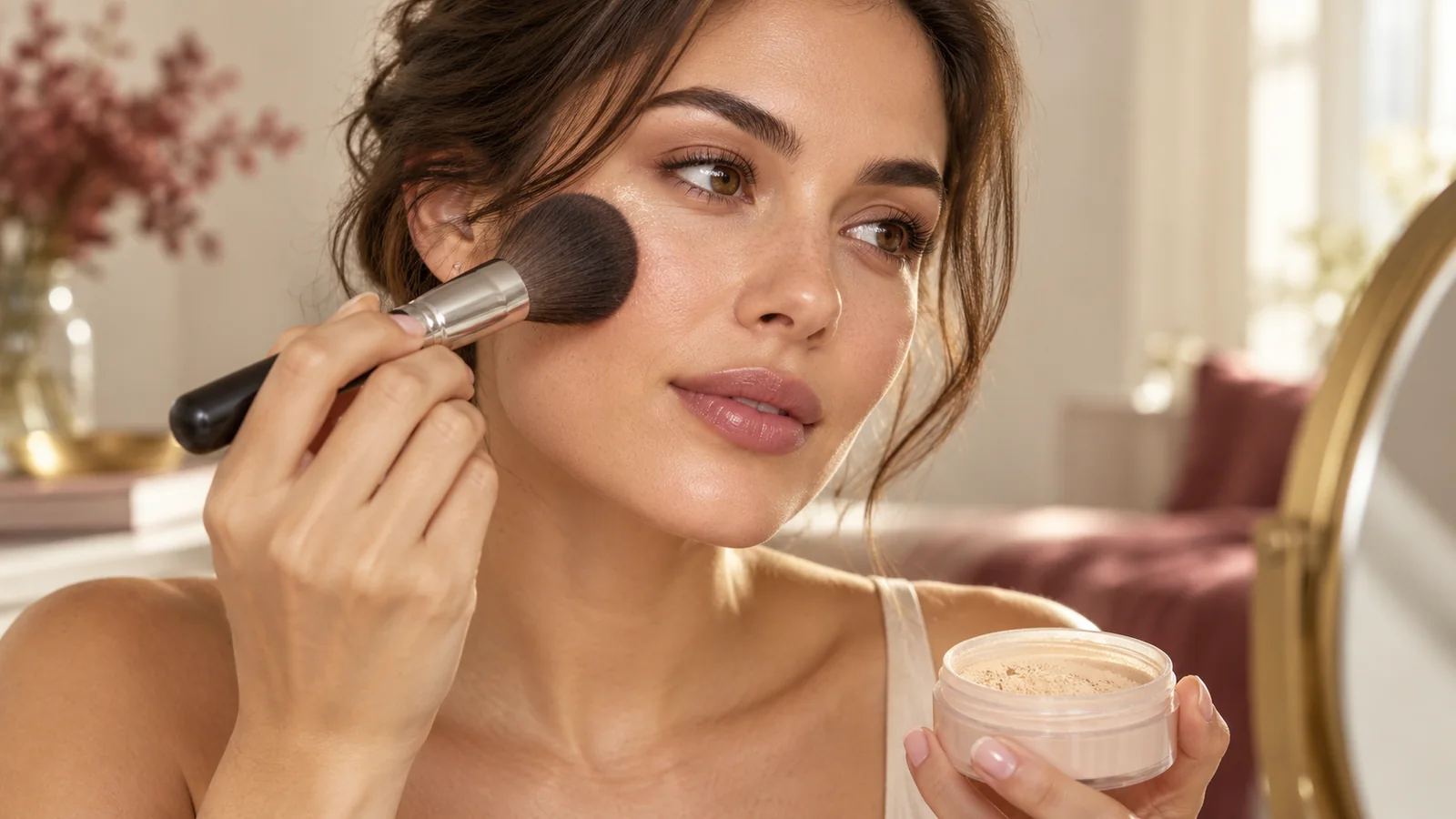
Press a small amount around the nose, center forehead, chin or beneath eyes if those areas crease. Remove excess from the tool first. Powdering already dry cheeks can emphasize flakes without improving useful wear.
Use spray to adjust finish and help layers look cohesive
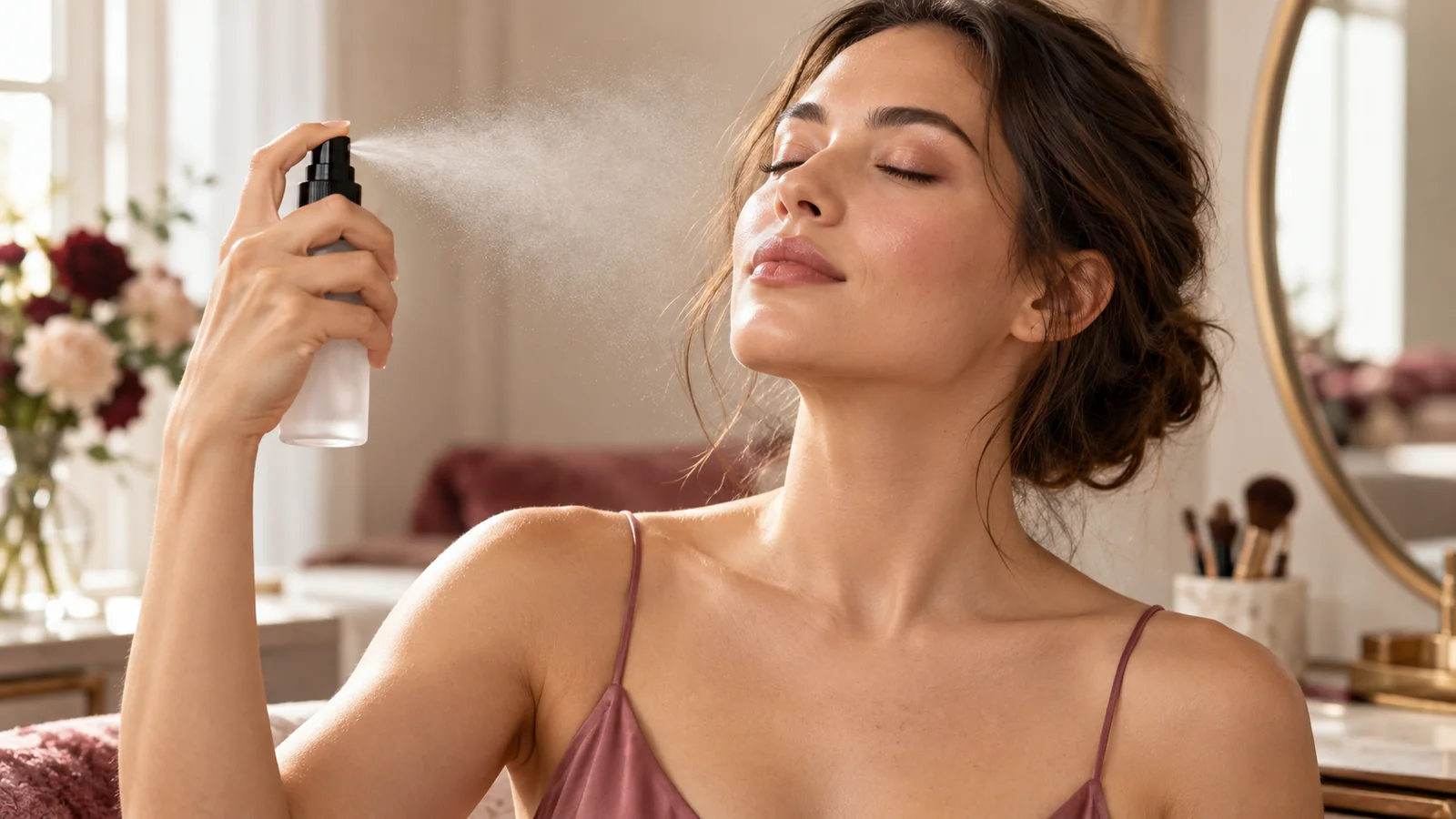
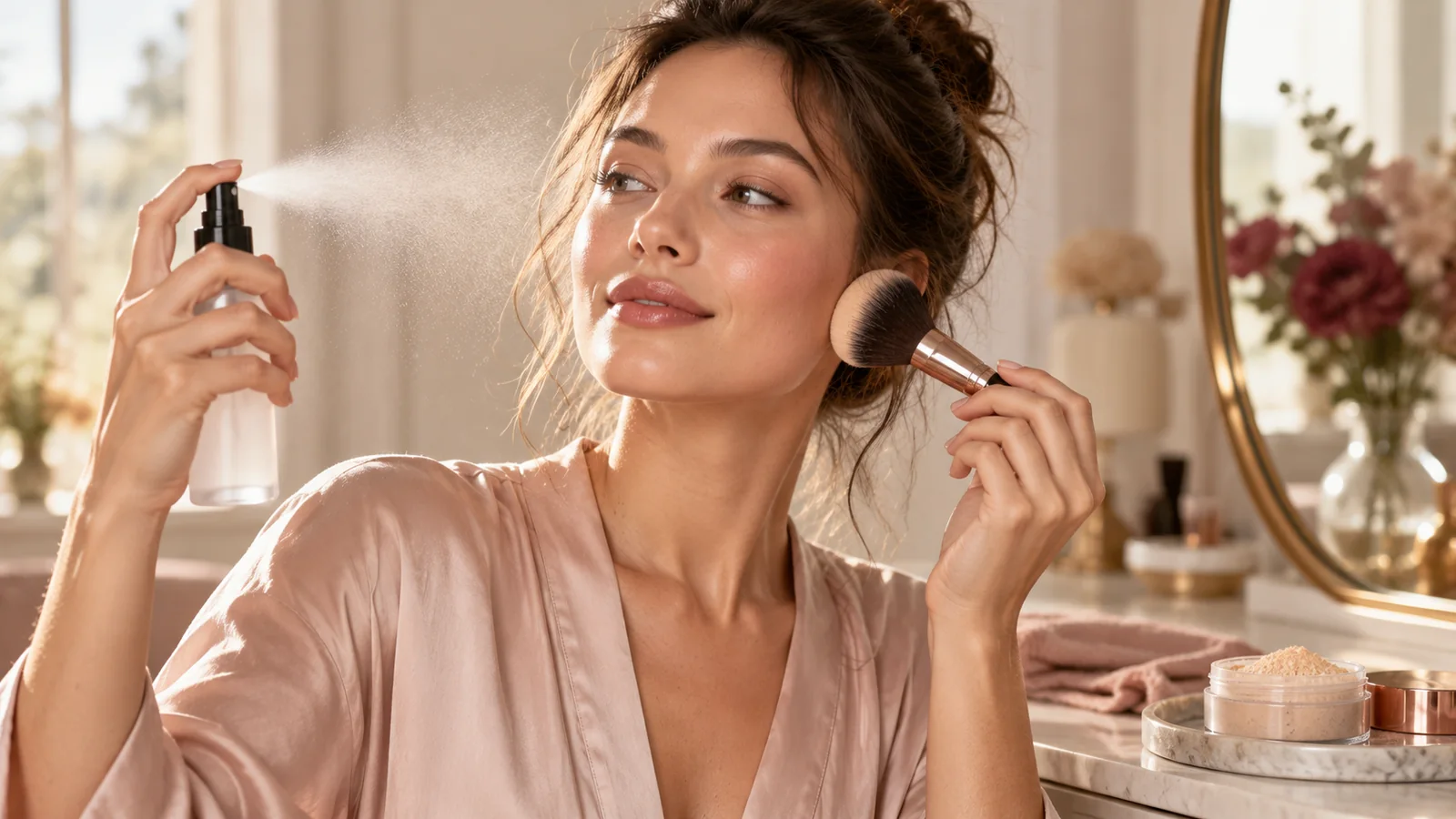
Hold the bottle at the instructed distance, close eyes and mist evenly. Allow it to dry without touching. A finishing spray can reduce a visibly powdery surface, but it cannot repair foundation that has already separated over oil.
Avoid saturating the face or over-powdering dry areas
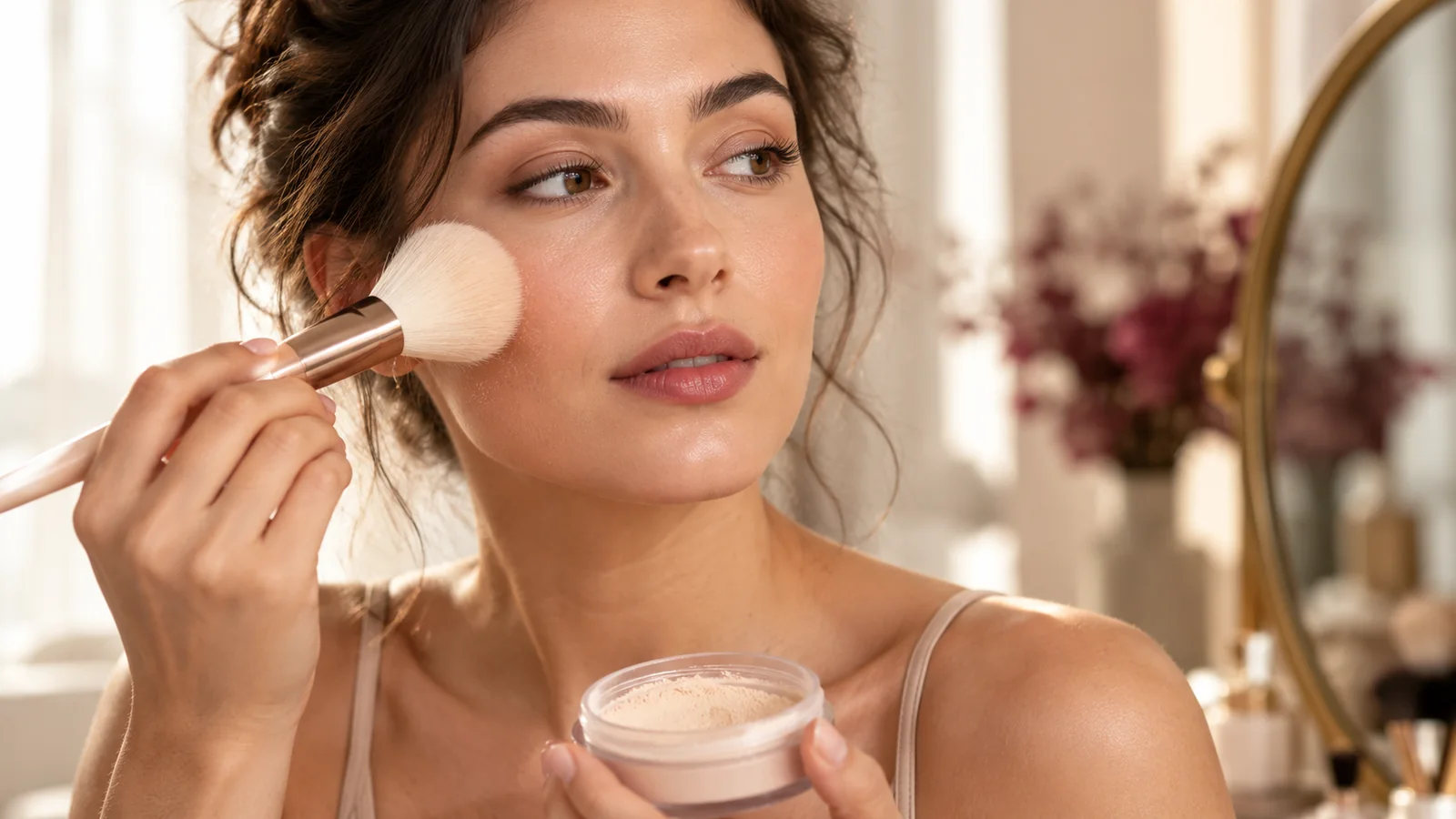
More is not automatically longer wearing. Excess spray can create droplets and move mascara; excess powder creates thickness that cracks with movement. Apply one controlled layer and observe the result.
Combine both only where the routine benefits
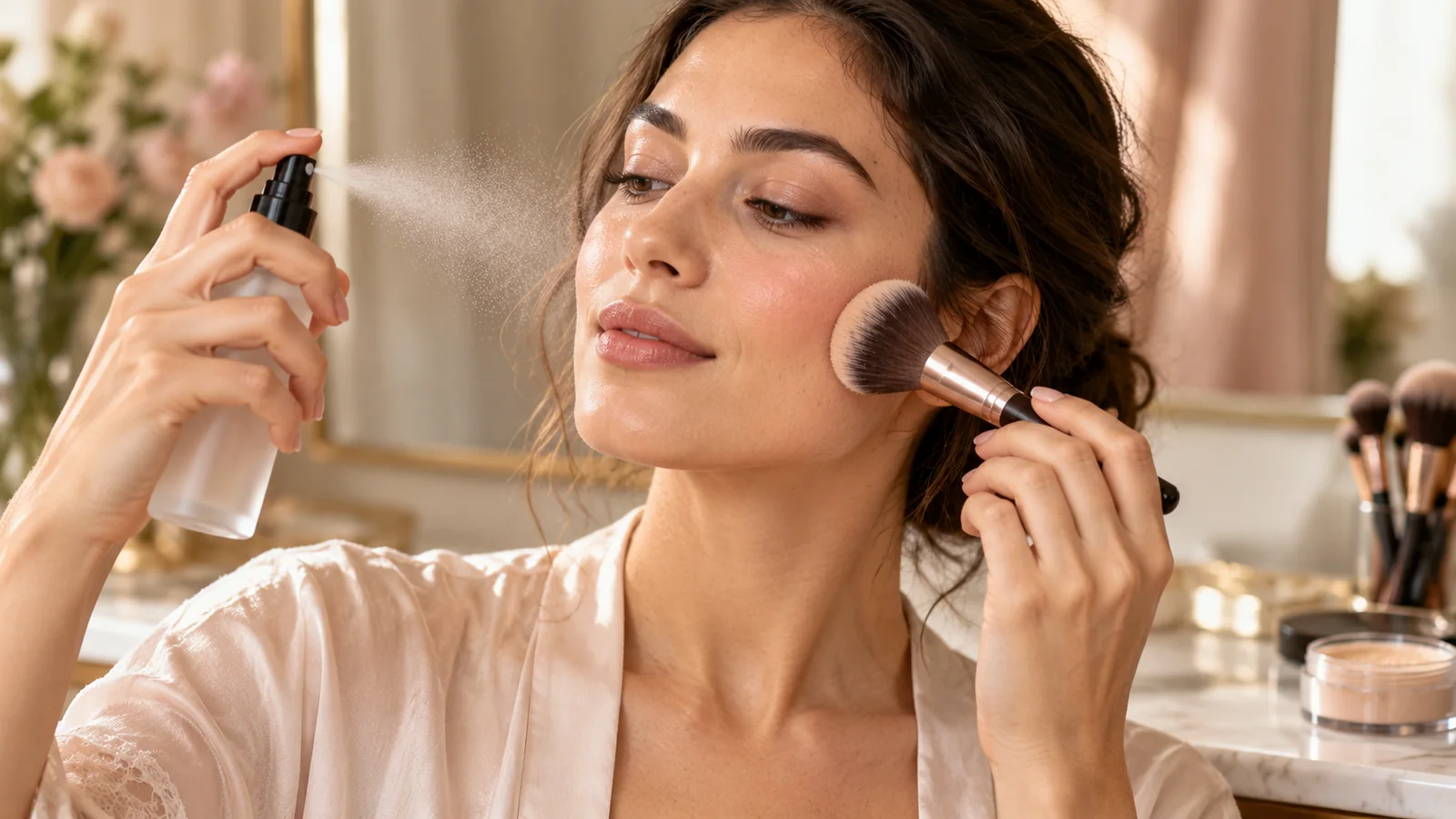
Powder the T-zone, complete color products, then mist lightly when both oil control and a cohesive finish are wanted. Leave dry zones minimally powdered. For humid conditions, use the regional strategy in the humidity makeup guide.
Evaluate wear at midday before changing the entire method
Note whether makeup is oily, dry, faded or separated. Each problem requires a different adjustment. Blot oil before adding powder; smooth separation before adding concealer; use spray only when its stated function addresses the issue.
Which one should you choose?
- Visible oil or tack: begin with targeted powder.
- Layers look dusty: try a compatible finishing spray.
- Long event: test powder and long-wear spray together beforehand.
- Dry, comfortable makeup: neither may be necessary.
Tool choice affects powder amount; compare application options in the sponge and brush guide.
Frequently asked questions
Can hairspray be used as setting spray?
No. Hairspray is not formulated or labeled for facial application and may irritate skin and eyes.
Should setting spray go before or after powder?
Usually after the completed makeup, but follow the product directions; some artists use layered methods for specific formulas.
Why does powder make makeup darker?
Oil or moisture can wet powder and deepen its appearance. Use less, blot first and check shade compatibility.
The bottom line
Select the tool for the failure you actually see: powder for controlled surface moisture, spray for its specific labeled finish or wear function. Skip both when makeup already behaves well.